The Simple Geranium Care Trick That Can Help Your Plants Bloom More Beautifully
Geraniums are among the most popular flowering plants for balconies, windowsills, patios, and home gardens. Their vibrant red, pink, purple, and white flowers can brighten almost any space, while their attractive green leaves make them beautiful even when they are not in bloom.
However, many gardeners experience the same frustrating problem: their geraniums grow plenty of leaves but produce very few flowers. Others notice that their plants bloom beautifully for a short period and then stop producing new flower buds.
The good news is that encouraging geraniums to flower more abundantly does not necessarily require expensive products or complicated gardening techniques. The secret lies in providing the right growing conditions, maintaining a consistent watering routine, and supplying balanced nutrition when the plant needs it.
You may have seen gardening tips recommending a spoonful of white powder added to the soil to make geraniums burst into bloom. Before trying such a trick, it is important to understand what the powder might be, whether it is suitable for your plants, and which methods are actually reliable.
1. The First Secret: Give Your Geraniums Enough Sunlight
One of the most important factors influencing geranium flowering is sunlight.
Geraniums generally grow and flower best when they receive several hours of direct sunlight each day. Many common garden geraniums benefit from approximately four to six hours of direct sunlight, although the ideal amount depends on the variety, climate, and temperature.
When a geranium receives insufficient light, it may develop long, weak stems and abundant green foliage while producing very few flowers.
If your plant is growing indoors, place it near a bright window where it receives plenty of natural light. A sunny balcony or patio may be even better, provided the plant is protected from extreme heat.
During very hot weather, particularly in warm climates, intense afternoon sunlight can stress plants growing in small containers. Morning sunlight followed by some protection during the hottest hours may help prevent wilting and leaf damage.
If your geranium has healthy leaves but refuses to flower, check its light exposure before adding fertilizer or other substances to the soil.
Sometimes, simply moving the plant to a brighter location can make a noticeable difference over the following weeks.
2. Be Careful With the Spoonful-of-Powder Gardening Trick
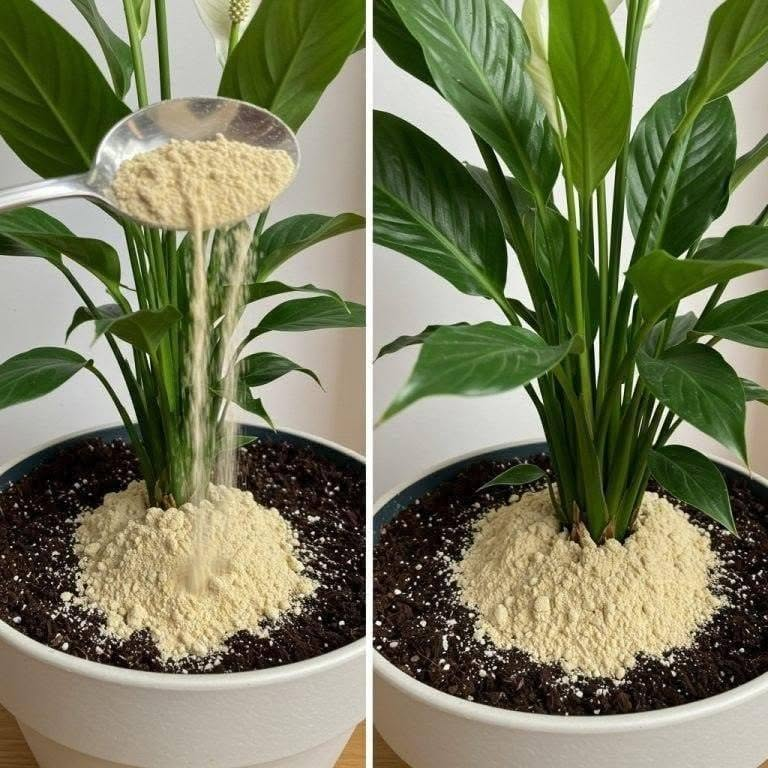
The image accompanying this article shows a spoonful of pale powder being sprinkled onto the soil around a geranium.
Although such images often suggest that a household ingredient can stimulate flowering, the powder cannot be identified with certainty from its appearance alone.
Different powders have very different effects on plants. Some contain useful nutrients, while others may alter soil acidity, increase salinity, or interfere with the availability of essential minerals.
For example, baking soda is not a general-purpose flowering fertilizer. Adding it to potting soil can increase alkalinity and may harm plants if used improperly.
Similarly, flour, sugar, and other kitchen ingredients should not be treated as substitutes for a properly formulated plant fertilizer. They do not provide a reliable balance of the nutrients geraniums need, and some can encourage unwanted microbial growth or attract pests.
If you want to use a powdered product, first identify the ingredient and confirm that it is appropriate for flowering plants.
A safer approach is to choose a balanced fertilizer specifically formulated for flowering plants and follow the manufacturer’s instructions. This provides a more predictable supply of essential nutrients without relying on an unidentified household powder.
Remember that no single ingredient can force every geranium to flower quickly. Flowering depends on light, temperature, plant health, nutrients, watering, and the plant’s natural growth cycle.
3. Choose the Right Fertilizer for Abundant Flowers
Geraniums need several essential nutrients to grow and produce flowers.
Nitrogen supports leafy growth, phosphorus contributes to normal root development and reproductive processes, and potassium plays important roles in water regulation and overall plant function. Plants also require smaller quantities of nutrients such as magnesium, iron, and other micronutrients.
The key is balance.
A fertilizer containing excessive nitrogen may encourage vigorous foliage at the expense of flowering, particularly when combined with insufficient sunlight. However, phosphorus should not be added indiscriminately either. More phosphorus does not automatically mean more flowers, and excessive application can create nutrient imbalances.
For potted geraniums, a complete fertilizer intended for flowering plants is usually a practical choice.
During active growth, apply it according to the label. Some products are designed for frequent feeding at low concentrations, while others are applied less often.
Never assume that doubling the recommended amount will improve results. Overfertilizing can damage roots, cause leaf-edge browning, and lead to the accumulation of salts in the potting mix.
If your geranium has recently been repotted into fresh, fertilized potting soil, additional fertilizer may not be necessary immediately.
Healthy plants generally respond best to consistent care rather than large, occasional doses of nutrients.
4. Water Correctly to Prevent Flowering Problems
Watering is another important part of geranium care.
Although geraniums need regular moisture, their roots also require oxygen. Soil that remains constantly wet can deprive roots of oxygen and encourage root rot.
On the other hand, allowing the soil to become extremely dry for extended periods can cause wilting, flower-bud loss, and reduced growth.
A practical method is to check the upper layer of soil before watering.
If the surface has begun to dry, insert a finger into the potting mix. If the upper portion feels dry and the plant needs water, water thoroughly until some excess drains from the bottom.
Empty the saucer afterward so that the pot does not remain standing in water.
The frequency of watering depends on several factors, including pot size, soil composition, sunlight, temperature, and airflow.
During warm, sunny weather, a small pot may dry quickly. During cool or cloudy periods, the same plant may need much less water.
Avoid following a rigid schedule without checking the soil. Watering every plant on the same day can lead to overwatering some pots and underwatering others.
Good drainage is essential. Choose containers with drainage holes and use a potting mix that allows excess water to escape.
5. Remove Faded Flowers to Encourage Further Blooming