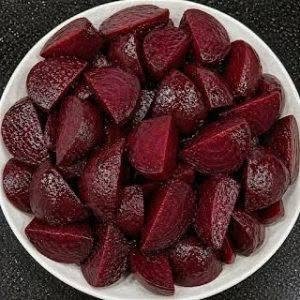
The Beetroot Upgrade: What Happens to Your Body When You Eat Beets?
Beets contain betalains, the pigments responsible for much of their distinctive red and purple color.
These compounds have antioxidant and other biological activities that researchers continue to investigate.
It’s important, however, not to turn the word “antioxidant” into a promise of disease prevention or treatment.
Eating foods containing antioxidants is part of a healthy diet, but individual foods do not function like medications.
Your body has its own antioxidant defense systems, and overall dietary quality matters far more than chasing one particular compound.
7. Your Digestive System Gets a Vegetable Boost
Whole beets provide fiber and water, making them useful as part of a balanced diet.
Fiber can help support regular bowel movements and contributes to a healthy gut environment.
If you regularly struggle with constipation, adding vegetables such as beets, along with fruits, legumes, whole grains, nuts, and seeds, may help.
But don’t expect beets alone to solve chronic constipation.
Persistent constipation can have many causes, including medications, low fluid intake, inadequate fiber, inactivity, pelvic-floor problems, and certain medical conditions.
If constipation is persistent or accompanied by blood, severe abdominal pain, vomiting, unexplained weight loss, or a significant change in bowel habits, medical evaluation is important.
8. Beetroot May Support Healthy Circulation
The nitrate pathway is one reason researchers are interested in beetroot.
Nitric oxide helps regulate blood-vessel tone.
When blood vessels relax appropriately, blood can flow more easily.
This is one possible explanation for the modest blood-pressure effects observed in studies of beetroot juice.
However, circulation is complicated.
If someone has chest pain, severe shortness of breath, fainting, sudden weakness, or other concerning symptoms, eating beets is not an appropriate treatment.
Those symptoms require medical attention.
9. You May Feel Fuller After Eating Whole Beets
Because whole beets contain fiber and have relatively low energy density compared with many highly processed foods, they can fit well into meals designed to be filling without being excessively calorie-dense.
For example, you could combine roasted beetroot with:
Beans
Lentils
Eggs
Fish
Chicken
Whole grains
Yogurt
Leafy greens
Nuts or seeds
This creates a much more nutritionally complete meal than relying on beetroot alone.
And while beets can support a healthy diet, they don’t directly “melt belly fat.”
Fat loss depends primarily on overall energy balance, eating patterns, physical activity, sleep, and other factors.
10. Beetroot May Be Useful Before Exercise
Some people consume beetroot juice before exercise because of its nitrate content.
Research has investigated beetroot supplementation taken several hours before physical activity, as well as repeated supplementation over several days.
The potential benefits are most relevant to certain types of endurance and high-intensity exercise.
However, more is not necessarily better.
Large amounts of beetroot juice can provide substantial nitrate and may also cause gastrointestinal discomfort in some people.
Anyone experimenting with beetroot for athletic performance should consider how their body responds during normal training rather than trying a large amount for the first time immediately before an important event.
11. Your Blood Pressure Isn’t the Only Thing That Matters
It’s tempting to focus entirely on beetroot’s nitrate content.
But whole vegetables are valuable because they contain many nutrients and plant compounds working together.
Beets can contribute to dietary variety, and variety is one of the most important principles of healthy eating.
Instead of asking:
“How much beetroot do I need to eat to get healthy?”
a better question is:
“How can I include beetroot as part of a varied diet?”
You might roast it, steam it, grate it into salads, blend it into soups, or combine it with other vegetables.
12. Beetroot Juice Isn’t Exactly the Same as Whole Beetroot
This distinction is important.
Juicing concentrates some components while removing much of the fiber.
Whole beetroot provides the physical bulk and fiber of the vegetable.
Beetroot juice may be more convenient for people specifically interested in dietary nitrate, but it can also contain a concentrated amount of naturally occurring sugars and may be easier to consume in large quantities.
For everyday nutrition, whole vegetables are generally an excellent foundation.
Juice can be an optional addition rather than a replacement for vegetables.
13. Be Careful With “Detox” Claims
You may see claims that beetroot “detoxifies the liver,” “cleans the blood,” or removes toxins from the body.
These phrases are usually much more dramatic than the science supports.
Your liver and kidneys already perform important roles in processing and eliminating substances from your body.
Eating beets doesn’t wash toxins out of your bloodstream like a cleaning product.
A diet rich in vegetables can support overall health, but that is very different from claiming that one vegetable performs a medical detox.
14. Beets Can Be Part of a Heart-Healthy Diet
If you’re trying to improve cardiovascular health, beetroot can fit comfortably into the bigger picture.
A heart-supportive eating pattern generally emphasizes:
Vegetables
Fruits
Whole grains
Beans and lentils
Nuts and seeds
Fish and other healthy protein sources
Unsaturated fats
It also limits excessive sodium, highly processed foods, added sugars, and unhealthy saturated-fat intake.
Adding beets while continuing to eat a highly processed diet isn’t likely to produce dramatic changes.
The overall pattern matters.
15. Some People Need to Be More Careful
Beetroot is a food, but that doesn’t mean unlimited amounts are appropriate for everyone.
Beets contain oxalates.
People who have been advised by a healthcare professional to follow a lower-oxalate diet, particularly some people prone to calcium oxalate kidney stones, may need to consider their overall intake.
People with kidney disease may also have individualized dietary requirements, including potassium restrictions in some cases.
And if you’re taking medications for blood pressure or have a medical condition affected by potassium or nitrate intake, it’s sensible to discuss major dietary changes with your healthcare professional.
This doesn’t mean you must avoid beets.
It means individual circumstances matter.
16. Don’t Be Alarmed by the Color
Beetroot is famous for turning food, urine, and stool red or pink.
This can look dramatic.
A person might eat beets at lunch and notice reddish urine later that day.
That’s often harmless.
But context matters.
If you’re unsure whether a color change is from food or blood, don’t rely solely on appearance.
Persistent red urine, especially without a recent beet intake or when accompanied by pain, burning, clots, fever, or other symptoms, deserves medical evaluation.
17. What’s the Best Way to Eat Beets?
There isn’t one perfect method.
Some simple options include:
Roasted beets
Wash and trim the beets, wrap them or place them in a covered baking dish, and roast until tender.
After cooling, the skin can often be rubbed away easily.
Boiled beets
Simmer whole beets until tender, then cool and peel.
Steamed beets
Steaming can soften beets while keeping them suitable for salads, bowls, and side dishes.
Raw grated beets
Young, tender beets can be peeled and grated into salads.
Beet salad
Combine cooked beetroot with leafy greens, beans, a protein source, nuts or seeds, and a simple dressing.
Beetroot juice
If you enjoy beet juice, treat it as part of your diet rather than as medicine.
Avoid assuming that drinking huge quantities will multiply the health benefits.
This provides a mixture of vegetables, fiber, protein, and healthy fats.
The goal isn’t to make beetroot do everything.
The goal is to make your entire meal nutritious.
How Much Should You Eat?
There is no universal amount of beetroot that everyone needs.
A normal serving of cooked beetroot can easily fit into a healthy diet.
You don’t need to eat enormous amounts to “activate” your body.
And there is no scientifically established amount that guarantees:
Rapid weight loss
Artery cleansing
Liver detoxification
Diabetes reversal
Cancer prevention
Guaranteed blood-pressure normalization
Those claims go beyond the evidence.
Think of beetroot as a nutrient-rich vegetable, not a miracle treatment.
The Bottom Line
Beetroot deserves its reputation as a nutritious food, but it doesn’t need exaggerated claims to be impressive.
Eating beets can provide fiber, folate, potassium, betalains, and naturally occurring dietary nitrate. Research on beetroot and beetroot juice suggests potential benefits for blood pressure and certain forms of exercise performance, although the effects are generally modest and vary from person to person.
The biggest benefit may actually come from something much simpler:
Beets make it easier to eat more vegetables.
You can roast them, steam them, grate them into salads, add them to grain bowls, or enjoy them alongside a balanced meal.
Just remember that a healthy food doesn’t become a medicine simply because research has found interesting biological effects.
Beetroot can support a healthy lifestyle.
It doesn’t replace blood-pressure medication, diabetes treatment, cholesterol treatment, exercise, sleep, or medical care.
And if your urine turns pink after eating beets, don’t panic—the beetroot may simply be making its presence known.