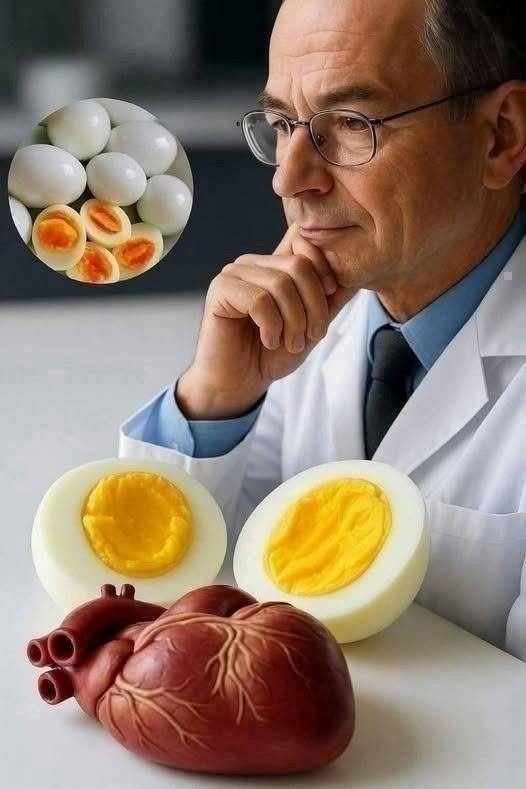
The Simple Trick for Perfectly Peeled Hard-Boiled Eggs Every Time
Don’t just make one tiny crack.
After cooling the egg, gently tap it against a hard surface to create cracks throughout the shell.
Then roll it gently under your palm.
You want the shell to develop a network of small cracks rather than one large crack.
This makes it easier to separate the shell from the egg.
Be gentle.
The goal is to crack the shell without crushing the cooked egg white underneath.
Peel Under Running Water
Here’s another simple trick that can make a big difference.
If the shell is sticking, peel the egg under a small stream of cool running water.
The water can help get underneath the membrane and wash away tiny pieces of shell as you work.
You don’t need a powerful stream.
A gentle flow is enough.
You can also peel the egg in a bowl of water if you prefer to conserve water.
The important thing is that moisture can help separate the shell and membrane from the egg.
Don’t Peel Tiny Pieces One at a Time
One of the most frustrating ways to peel an egg is to pick off individual pieces of shell for several minutes.
Instead, once you’ve created cracks throughout the shell, try to find the membrane beneath the shell.
If you can get your fingers under the membrane, you may be able to remove larger sections of shell at once.
The membrane is often the key.
You’re not really trying to separate the shell directly from the egg white.
You’re trying to separate the shell and membrane together from the cooked egg.
The Membrane Is the Real Challenge
An egg has several protective layers.
The hard outer shell surrounds membranes that sit between the shell and the egg white.
When these membranes adhere strongly to the cooked white, peeling becomes difficult.
That’s why you can sometimes remove the shell but leave a crater in the egg.
The shell comes away, but part of the white remains attached to the membrane.
Understanding this explains why techniques that encourage easier membrane separation can produce better-looking eggs.
Should You Add Baking Soda?
You may have heard that adding baking soda to the cooking water makes eggs easier to peel.
This advice is extremely common.
Baking soda is alkaline, and the theory is that increasing the alkalinity of the cooking environment can influence the egg white and make peeling easier.
However, the effect isn’t necessarily dramatic or consistent, and you don’t need baking soda to make good hard-boiled eggs.
If you want to experiment with it, a small amount may be used, but the more dependable factors are egg age, cooking method, and rapid cooling.
Don’t assume that adding a large amount will produce dramatically better eggs.
It may simply affect the flavor or cooking water without solving the underlying problem.