The Simple Trick for Perfectly Peeled Hard-Boiled Eggs Every Time
Vinegar is another popular suggestion.
Because vinegar is acidic, it can help soften or dissolve calcium carbonate in eggshells when eggs are exposed to it for a sufficiently long period.
But adding vinegar to the boiling water isn’t a guaranteed solution for producing perfectly peeled eggs.
It may also affect the cooking environment in ways that aren’t necessary.
If your goal is simply easy peeling, focus on the fundamentals rather than adding lots of ingredients to the water.
Steaming Eggs Can Also Work
Another technique worth knowing is steaming.
Instead of submerging the eggs completely in boiling water, you can place them in a steamer basket above boiling water and cook them with steam.
Many cooks find steamed eggs easier to peel.
The basic process is:
Bring water to a boil.
Place eggs in a steamer basket.
Cover the pot.
Steam until the eggs reach the desired doneness.
Transfer them immediately to an ice bath.
Steaming can be particularly convenient when you’re preparing a large batch.
Don’t Overcook Your Eggs
Perfect peeling isn’t the only goal.
You also want the egg to have a pleasant texture.
An overcooked egg can develop a dry, rubbery white and a yolk with a greenish-gray ring around the outside.
That green ring isn’t generally dangerous. It results from a reaction between sulfur compounds in the egg white and iron in the yolk when the egg is exposed to excessive heat.
But it isn’t the texture most people want.
Cooking time should therefore be adjusted according to the size of the eggs, starting temperature, cooking method, altitude, and desired yolk consistency.
A Simple Hard-Boiled Egg Routine
If you want a straightforward method to repeat, try this:
Step 1: Choose eggs that aren’t extremely fresh
Eggs that have been refrigerated for several days are often easier to peel than very fresh eggs.
Step 2: Boil the water first
Bring enough water to fully cover the eggs to a boil.
Step 3: Add the eggs carefully
Lower them into the water using a spoon.
Step 4: Cook until done
Keep the cooking conditions consistent so you can adjust the timing to your preferred yolk.
Step 5: Cool immediately
Transfer the cooked eggs to ice-cold water.
Step 6: Chill thoroughly
Allow them to sit in the cold water for approximately 10 to 15 minutes.
Step 7: Crack the shell
Tap the egg gently all over.
Step 8: Start at the wide end
Look for the air pocket and begin separating the shell there.
Step 9: Peel under water
Use a gentle stream of cool water if the shell is stubborn.
Step 10: Rinse and enjoy
Remove any remaining pieces of shell and your egg is ready.
What If You’re Using Very Fresh Eggs?
Sometimes you don’t have a choice.
Perhaps you have backyard chickens and collected the eggs that morning.
Or perhaps you simply bought eggs that are extremely fresh.
You can still boil them.
Just be prepared for the possibility that peeling may require more patience.
Steaming may be worth trying, and rapid cooling is particularly useful.
You can also make a small test batch to determine which method works best with the eggs you normally buy.
Does Egg Size Matter?
Yes.
Large eggs generally require a different cooking time from small or extra-large eggs.
If you change egg size but use exactly the same cooking time, the yolk may not have the same consistency.
For consistent results, use eggs of approximately the same size when cooking a batch.
This is especially useful when preparing eggs for:
Egg salad
Deviled eggs
Salads
Sandwiches
Breakfast
Meal preparation
Don’t Forget Food Safety
Easy peeling is useful, but food safety matters more.
Keep eggs refrigerated and avoid leaving cooked eggs at room temperature for long periods.
After cooking, cool them promptly and refrigerate them.
If you’re preparing eggs for several days of meals, store them properly in the refrigerator.
Cooked eggs should be discarded if they have been left under unsafe conditions for too long.
Good technique should always include safe storage.
Why Do Some Eggs Peel Perfectly and Others Don’t?
Even when you follow the same method, you may occasionally get a stubborn egg.
That’s normal.
Eggs aren’t identical.
Their age, size, shell characteristics, storage conditions, and internal chemistry can vary.
That’s why there isn’t one magical trick that guarantees every single egg will peel perfectly.
But controlling the major variables can dramatically improve your results.
The combination of appropriately aged eggs, controlled cooking, rapid cooling, and careful peeling is far more useful than relying on a mysterious kitchen secret.
The Best “Chef Trick” May Be Simpler Than You Think
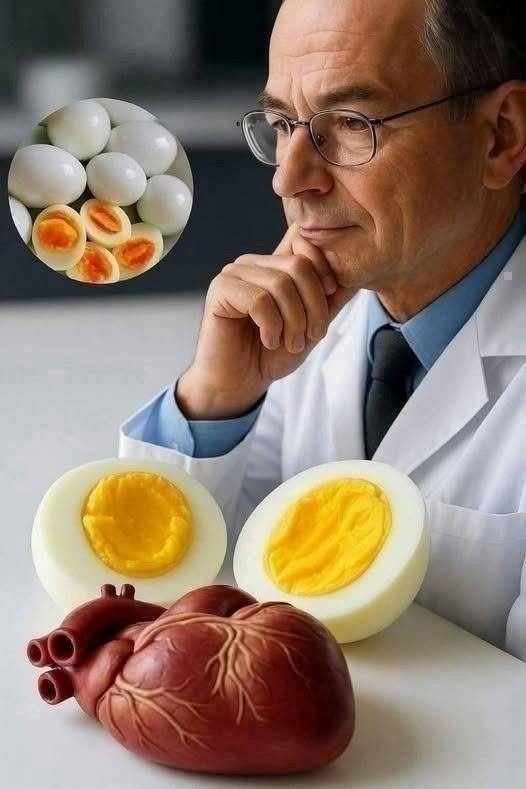
The viral image makes perfect peeling sound like some secret that everyone except you knows.
But there isn’t necessarily one hidden trick that professional chefs are keeping from everyone else.
Experienced cooks simply learn which variables matter.
They know that extremely fresh eggs can be stubborn.
They know that rapid cooling helps.
They know that cracking the shell thoroughly makes the job easier.
They know that starting at the wide end can help.
And they know that running water can make stubborn shells much less frustrating.
Once you understand these principles, peeling eggs becomes much easier.
Final Takeaway
Perfectly peeled hard-boiled eggs aren’t really about one magical ingredient or secret hack.
The biggest factors are the age of the eggs, how they are cooked, how quickly they are cooled, and how you remove the shell.
For consistently good results, try starting with eggs that aren’t extremely fresh, cook them in already-hot water or steam them, and immediately transfer them to an ice bath.
Once they’re thoroughly chilled, crack the shell all over, gently roll the egg, and begin peeling from the wider end where the air pocket is located.
If the shell sticks, peeling under cool running water can make the process much easier.
And if one egg still refuses to cooperate, don’t worry—sometimes even the most experienced cook gets a stubborn egg.
The real secret is simply knowing why some eggs peel easily and others don’t. Once you understand what is happening between the shell, membrane, and egg white, that frustrating kitchen problem becomes much easier to solve.