The Vegetable Most Likely to Carry Parasites Is Also One Many People Love Eating Raw
Celery is one of those vegetables that people often eat without giving much thought to food safety. It is crunchy, refreshing, easy to add to salads, and commonly eaten raw with dips or alongside meals.
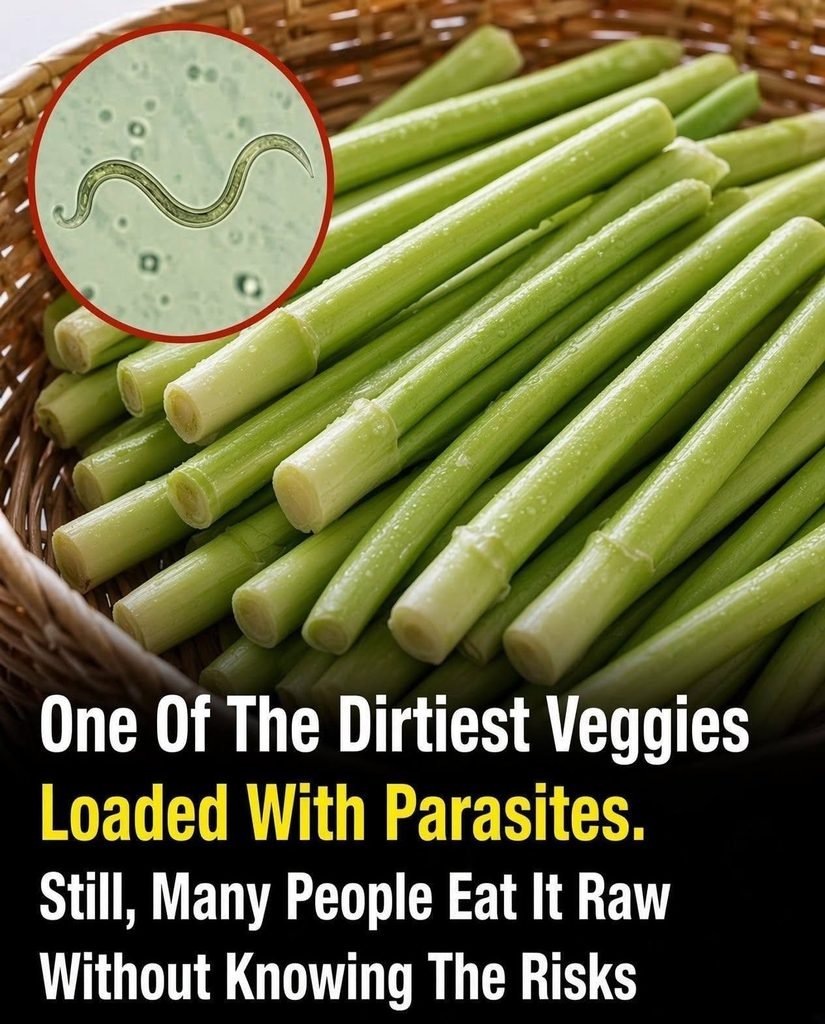
But a viral claim has been circulating that celery is “one of the dirtiest vegetables” and is “loaded with parasites.”
That wording is frightening, but it gives a misleading impression.
Celery is not naturally loaded with parasites. Like many fresh fruits and vegetables, however, celery can become contaminated with microorganisms, including bacteria, viruses, and—in some circumstances—parasites, depending on how it was grown, harvested, transported, stored, and prepared.
The important lesson isn’t that you should stop eating celery. It is that raw produce should be handled and washed properly before consumption.
Why Can Raw Vegetables Carry Contamination?
Fresh vegetables are grown outdoors or in agricultural environments where they can come into contact with soil, water, insects, animals, agricultural equipment, and human hands.
Contamination can occur at several points along the journey from farm to kitchen.
For example, contaminated irrigation water can potentially introduce microorganisms onto produce. Soil can also contain microorganisms and other organisms. During harvesting and transportation, vegetables can come into contact with containers, surfaces, equipment, and hands.
Once the vegetable reaches your kitchen, improper handling can introduce additional contamination.
This is why food-safety recommendations apply to many different types of produce, not just celery.
Does Celery Actually Contain Parasites?
This is where the viral headline needs to be put into perspective.
Celery does not naturally contain human parasites as part of its normal composition.
The microscopic worm shown in the image is also not proof that celery contains parasites. Microscopic worms known as nematodes are extremely widespread in nature. Many different species live in soil and water, and some are associated with plants while others affect animals.
A photograph of a microscopic organism placed next to celery does not establish that the organism came from the celery or that it poses a danger to people who eat celery.
The distinction between possible contamination and being inherently contaminated is extremely important.
Why Eating Celery Raw Gets More Attention
Cooking is an important food-safety step because sufficient heat can destroy many disease-causing microorganisms.
When celery is eaten raw, there is no cooking step between the vegetable and your mouth.
That doesn’t mean raw celery is dangerous.
It simply means that washing and handling become particularly important.
The same principle applies to other foods commonly eaten raw, including:
Lettuce
Spinach
Cabbage
Cucumbers
Tomatoes
Carrots
Fresh herbs
Berries
Apples
Peppers
In other words, celery isn’t uniquely dangerous simply because people eat it raw.
How to Wash Celery Correctly
If you enjoy raw celery, a few simple habits can reduce the risk of consuming contaminants.
1. Wash your hands first
Before preparing celery, wash your hands thoroughly with soap and water.
Clean hands help prevent microorganisms from being transferred onto food after it has been washed.
2. Remove damaged areas
Inspect the celery and remove sections that are visibly rotten, slimy, moldy, or badly damaged.
If the entire bunch appears spoiled, it is better to discard it.
3. Separate the stalks
Separating individual celery stalks makes it easier to reach areas where dirt may collect.
4. Rinse under clean running water
Rinse each stalk thoroughly under clean running water.
Gently rub the surface with your hands while rinsing.
Pay attention to crevices and the base of the stalk.
5. Use clean equipment
After washing the celery, place it on a clean cutting board or clean surface.
A clean vegetable can become contaminated again if it is placed on a surface that previously held raw meat or other contaminated foods.
Should You Wash Celery With Soap?
No.
It may seem logical to use dish soap because celery is a food and you want it to be “extra clean,” but household detergents are not intended for consumption.
Do not wash fruits or vegetables with dishwashing liquid, bleach, disinfectant, or other household chemicals.
Clean running water and proper food-handling practices are the safer approach.
What About Vinegar Water?
Vinegar is frequently recommended online as a way to “kill parasites” on vegetables.
Although vinegar has antimicrobial properties, soaking celery in vinegar should not be considered a guarantee that all harmful microorganisms or parasites have been eliminated.
The most important practice is still thorough washing under clean running water.
It is also important to remember that washing cannot necessarily remove every microorganism that might be present. That’s one reason proper agricultural practices, refrigeration, hygiene, and cooking when appropriate all play roles in food safety.
Celery Is Actually a Nutritious Vegetable
The frightening headline can distract from the fact that celery can be a perfectly useful part of a balanced diet.