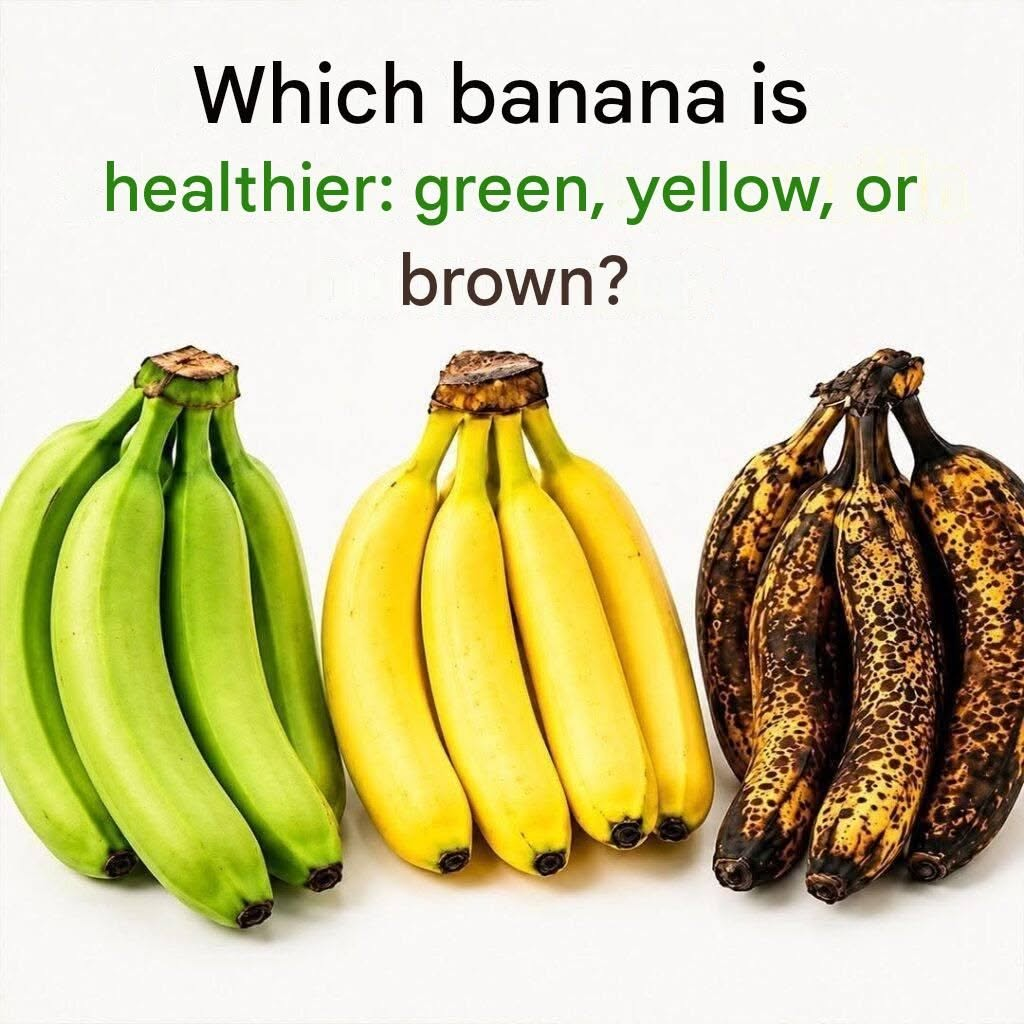
Which Banana Is Healthier: Green, Yellow, or Brown? The Answer May Surprise You
Bananas are among the world’s most popular fruits, but did you know that their nutritional properties change as they ripen? A green banana, a bright yellow banana, and a brown-spotted banana may look like different versions of the same fruit, yet their taste, texture, and carbohydrate composition can vary considerably.
Some people prefer green bananas because they are firm and less sweet. Others wait until bananas turn bright yellow, when they become softer and sweeter. Still others love brown-spotted bananas because they are exceptionally soft and easy to mash.
But which banana is actually healthier?
The answer depends on what you are looking for. Green, yellow, and brown bananas can all be nutritious choices. The main differences involve ripeness, resistant starch, natural sugars, texture, and how easily the fruit is digested.
Understanding these differences can help you choose the banana that best suits your preferences and nutritional needs.
1. Green Bananas: A Source of Resistant Starch
Green bananas are unripe bananas. Their flesh is firm, their flavor is relatively mild, and they contain less sweetness than fully ripe bananas.
One of their most interesting nutritional characteristics is their resistant starch content.
Resistant starch is a type of carbohydrate that resists digestion in the small intestine and can reach the large intestine, where gut bacteria ferment it. This process produces substances called short-chain fatty acids, which play a role in intestinal health.
Because resistant starch is not digested in the same way as ordinary starch, it can have a different effect on blood glucose levels.
Green bananas generally contain more resistant starch than ripe bananas. As bananas mature, some of that starch is converted into sugars, changing both the texture and taste of the fruit.
Potential Benefits of Green Bananas
They may support digestive health. Resistant starch can act as a fermentable substrate for beneficial gut bacteria. However, people who are sensitive to fermentable carbohydrates may experience gas or bloating.
They may produce a different blood glucose response. The higher resistant starch content of green bananas may help moderate the rate at which some carbohydrates are digested. Individual responses vary, and portion size and the rest of the meal also matter.
They are less sweet. Green bananas contain less sugar than fully ripe bananas, making them appealing to people who prefer a less sweet taste.
They can help diversify carbohydrate intake. Including different sources of fiber and starch in a balanced diet can support overall digestive health.
Are Green Bananas Suitable for Everyone?
Not necessarily.
Green bananas are firmer and can be harder to digest for some people. Their resistant starch may cause gas, abdominal discomfort, or bloating in sensitive individuals.
They are also less convenient to eat raw because of their firm texture and relatively starchy flavor.
In many cuisines, green bananas are cooked before eating. They can be boiled, steamed, baked, or incorporated into savory dishes.
Best choice: Green bananas may be particularly appealing to people who want a less sweet fruit with more resistant starch, provided they tolerate it comfortably.