Why You Should Hang Eggshells in Your Garden: A Simple Way to Reuse Kitchen Waste
Most people crack an egg, use the contents, and throw the shell straight into the trash. But if you have a garden, those shells may still have a useful second life.
Eggshells are primarily made of calcium carbonate, a mineral that can contribute calcium to soil over time. Gardeners have used crushed eggshells for years as a way to recycle kitchen waste and add a mineral-rich material to compost and garden beds.
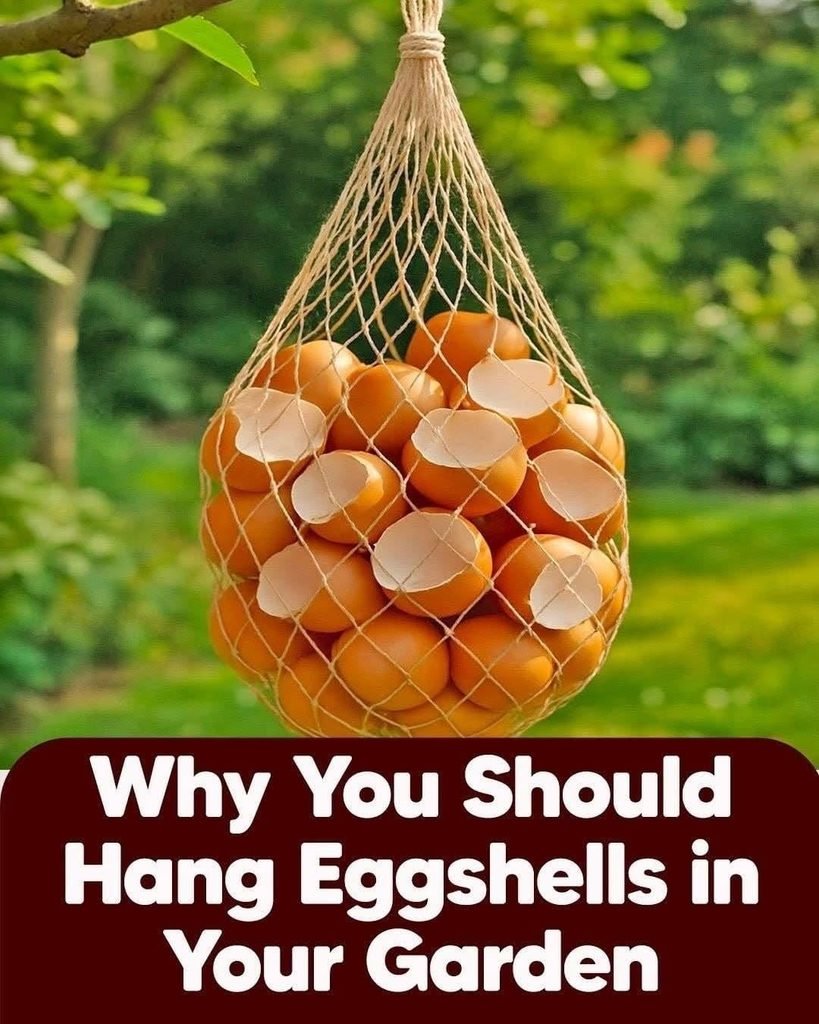
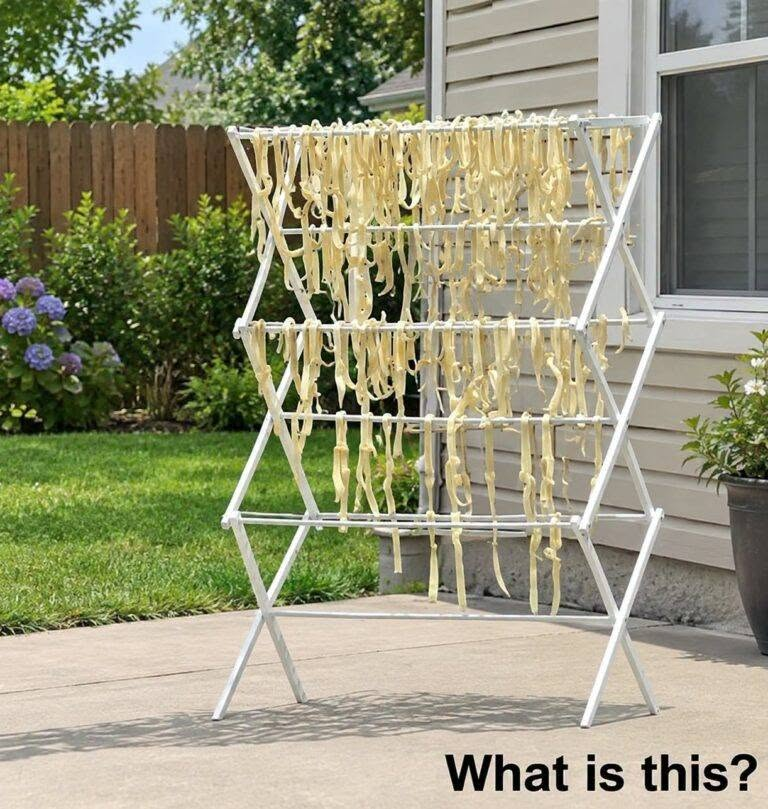
The image of eggshells hanging in a mesh bag may look unusual, but it represents an interesting idea: instead of throwing eggshells away, collect them, dry them, and reuse them around your garden.
However, there is an important detail that viral gardening posts often leave out:
Simply hanging whole eggshells in a bag will not magically turn them into a powerful fertilizer.
The real benefits come from how the shells are prepared and how they are eventually incorporated into the soil or compost.
Eggshells Are Rich in Calcium
The main reason gardeners are interested in eggshells is their calcium content.
Eggshells consist largely of calcium carbonate, the same general mineral found in agricultural limestone.
Calcium is an essential plant nutrient. Plants use calcium in the development of cell walls and tissues, and it plays an important role in normal plant growth.
This doesn’t mean that every garden needs extra calcium.
If your soil already contains sufficient calcium, adding large quantities of eggshells may provide little benefit.
That’s why eggshells are best viewed as a useful recycled soil amendment, rather than a universal plant treatment.
Why Put Eggshells in a Mesh Bag?
Using a mesh bag can be a convenient way to collect and dry eggshells.
Instead of allowing shells to pile up inside a kitchen container where they may become wet or develop odors, you can rinse them, place them in a breathable container or mesh bag, and allow them to dry.
Air circulation helps the shells dry more quickly.
Once they’re completely dry, you can crush them and store them for later use.
The hanging part is therefore more about storage and drying than creating a special fertilizer.
Hanging Eggshells Does Not Release Large Amounts of Calcium
This is an important distinction.
Whole eggshells are relatively hard and break down slowly.
If you put intact shells in a mesh bag and hang them from a tree, very little calcium will immediately become available to the surrounding soil.
Rainwater may wash over them, but eggshell calcium carbonate is not highly soluble in ordinary water.
So if a viral post suggests that hanging eggshells will rapidly feed nearby plants, that claim should be treated cautiously.
For the calcium to become more useful as a soil amendment, the shells should eventually be crushed or ground and incorporated into the soil or compost.
How to Prepare Eggshells for the Garden
The process is simple.
Step 1: Save the shells
Whenever you use eggs, collect the shells instead of throwing them away.
You can keep a small container in the kitchen specifically for this purpose.
Step 2: Rinse them
Rinse away remaining egg residue.
This helps reduce unpleasant odors and makes the shells easier to store.
Step 3: Dry them completely
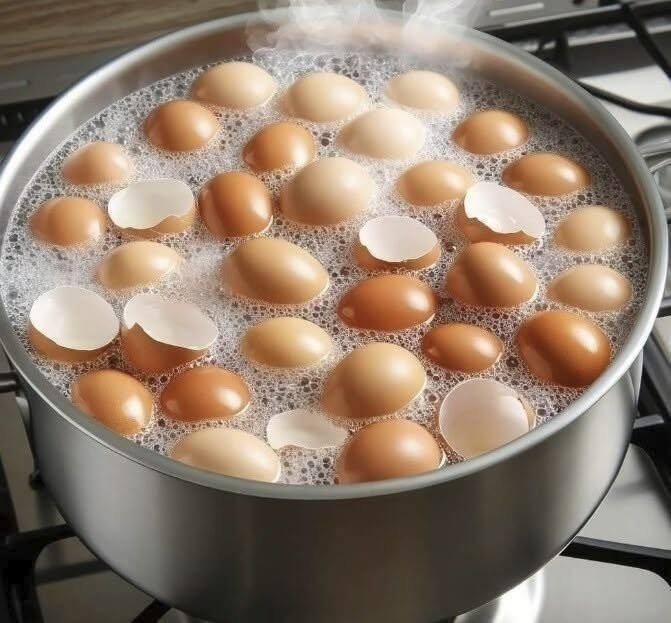
Spread the shells out and allow them to dry.
You can also allow them to dry in a warm, well-ventilated place.
If you prefer, gently heating them can help dry them more thoroughly.
Step 4: Crush them
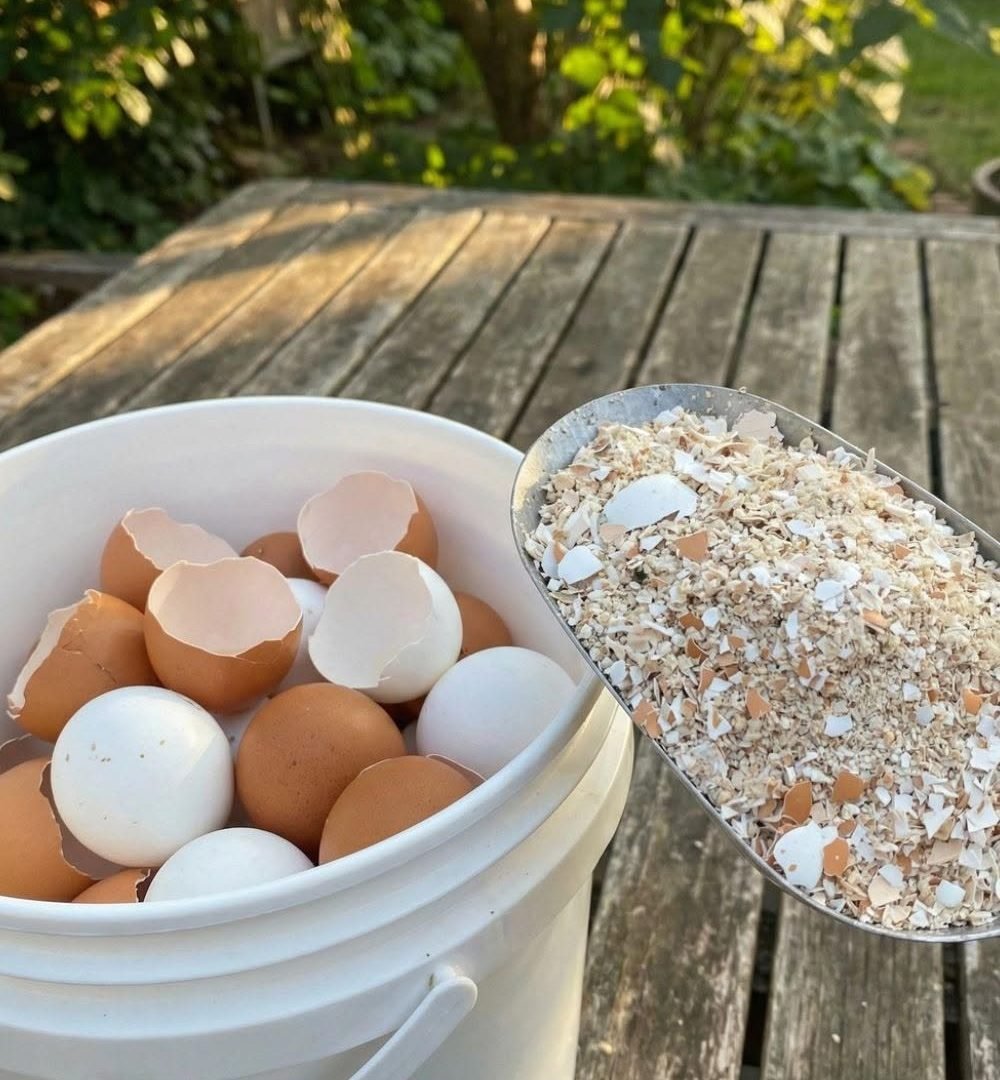
Once dry, crush the shells into small pieces.
For faster breakdown, grind them into a coarse powder.
The smaller the pieces, the greater the surface area exposed to moisture and soil.
Step 5: Add them to compost or soil
Mix the crushed shells into your compost or incorporate a modest amount into appropriate garden soil.
Don’t create a thick layer of shells around your plants.
Eggshells Can Be Added to Compost
One of the easiest ways to reuse eggshells is through composting.
Eggshells are different from vegetable scraps because they don’t decompose rapidly like fruit peels or leafy vegetables.
Instead, they contribute mineral material to the compost.
Crushing them before adding them makes them easier to distribute throughout the compost pile.
Over time, they can become part of the finished compost and eventually return minerals to the soil.
Can Eggshells Improve Acidic Soil?
Eggshells contain calcium carbonate, which has a liming effect.
That means they can gradually help raise soil pH when incorporated into acidic soil.
But there is an important warning:
You don’t want to raise soil pH unnecessarily.
Many plants prefer particular soil conditions, and changing the pH without knowing your starting point can create new problems.
If you’re seriously trying to correct soil acidity, a soil test is much more useful than guessing.
A soil test can tell you the approximate pH and whether amendments are actually needed.
What About Tomatoes?
Eggshells are particularly famous among gardeners who grow tomatoes.
You may have heard that putting eggshells around tomato plants prevents blossom-end rot.
The relationship is more complicated.
Blossom-end rot is associated with inadequate calcium reaching developing fruit, but the problem is often related to inconsistent water availability and the plant’s ability to transport calcium, rather than simply having too little calcium in the soil.
If the soil already contains enough calcium, adding more eggshells won’t necessarily solve the problem.