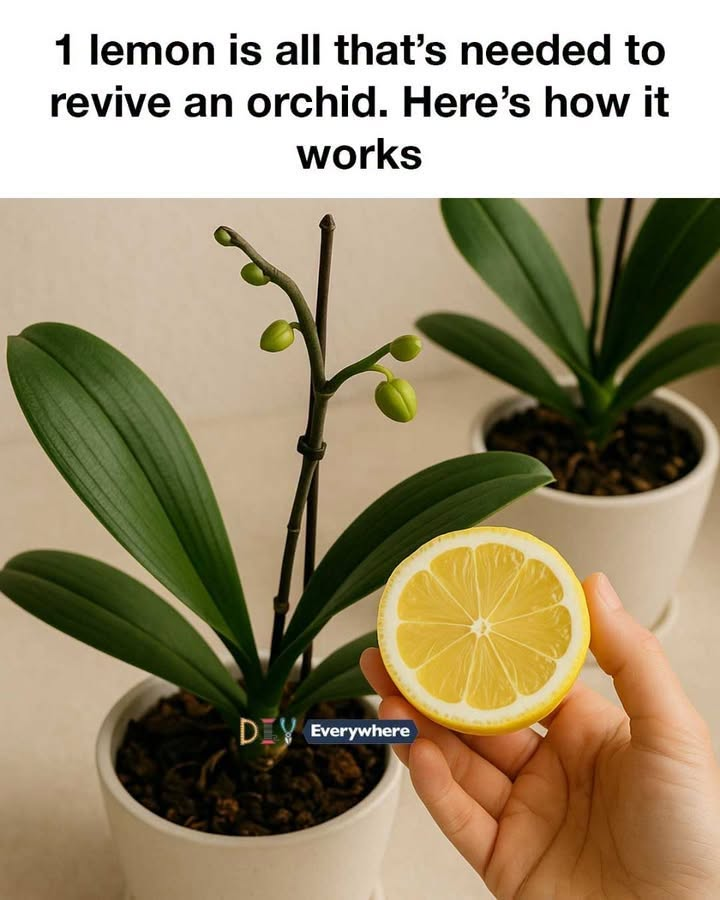
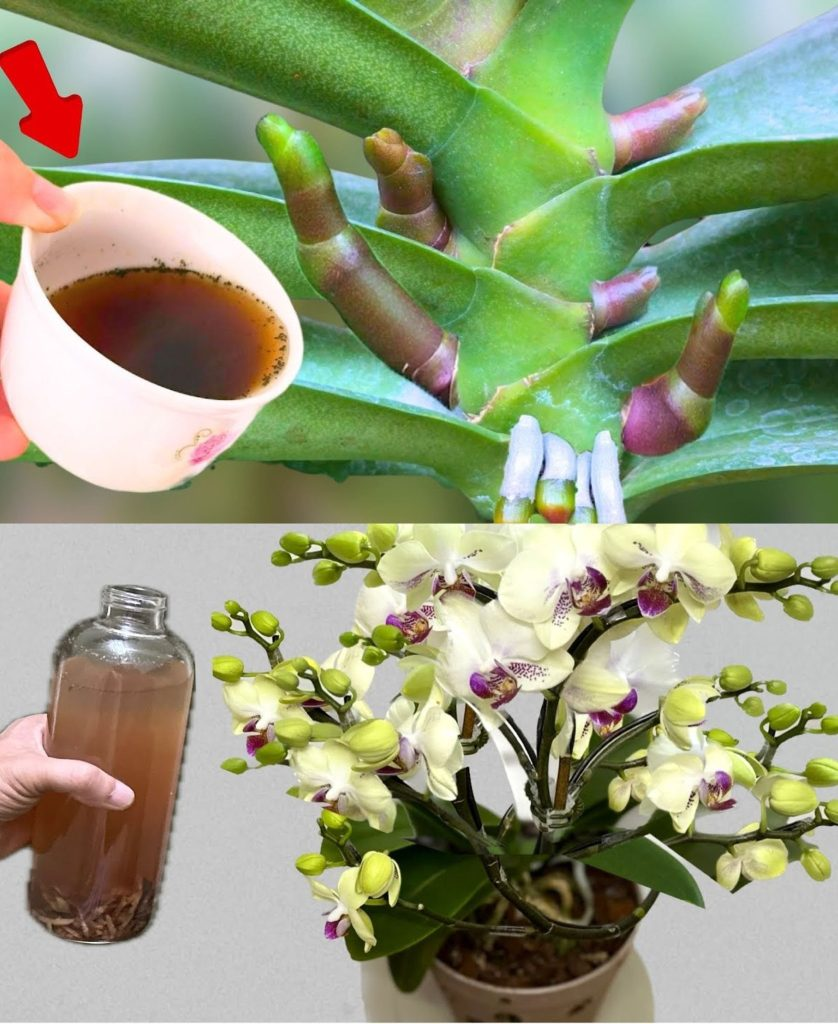
1 lemon is all that’s needed to revive an orchid. Here’s how it work
Orchids are among the most beautiful houseplants, admired for their elegant flowers, delicate appearance, and long-lasting blooms. However, they can also be surprisingly difficult to care for. One day, an orchid may look healthy and full of life, and a few weeks later, its flowers begin falling, its leaves turn yellow, or its roots become weak.
When this happens, many plant owners start searching for simple household remedies to bring their orchids back to life. One popular gardening suggestion claims that a single lemon is all you need to revive a struggling orchid.
The idea sounds attractive. Lemons are inexpensive, easy to find, and commonly used in household cleaning and gardening tips. But can lemon juice really bring a dying orchid back to life?
The answer is more complicated than social media posts suggest.
Although lemons contain citric acid and vitamin C, there is no reliable evidence that applying lemon juice to an orchid can restore damaged roots, produce new flowers, or cure a sick plant. In fact, lemon juice is acidic enough to damage delicate plant tissues and disturb the growing conditions around orchid roots.
Fortunately, there are safer and more effective ways to help an orchid recover.
Understanding what an orchid needs, identifying the actual cause of its decline, and correcting its growing conditions can make a significant difference.
1. Why Do People Recommend Lemon for Orchids?
The lemon trick has become popular because lemons contain several naturally occurring substances.
The most recognizable is citric acid, which gives lemons their characteristic sour taste.
Some people believe that because certain plants grow in slightly acidic environments, adding lemon juice to their water may improve their growing conditions.
Others suggest that lemon contains antioxidants and nutrients that could somehow stimulate plant growth.
However, these explanations oversimplify plant nutrition.
Plants do not absorb nutrients in the same way humans consume food. They require specific minerals in appropriate concentrations, and their roots are sensitive to changes in acidity.
Most common household orchids, especially Phalaenopsis orchids, are grown in specialized potting media rather than ordinary garden soil.
Their roots need a balance of moisture, air circulation, and appropriate mineral availability.
Adding concentrated lemon juice does not provide the balanced nutrition an orchid needs.
It may instead lower the pH of the growing medium too much, potentially interfering with nutrient availability and damaging sensitive root tissues.
For this reason, lemon juice should not be considered an orchid fertilizer or revival treatment.