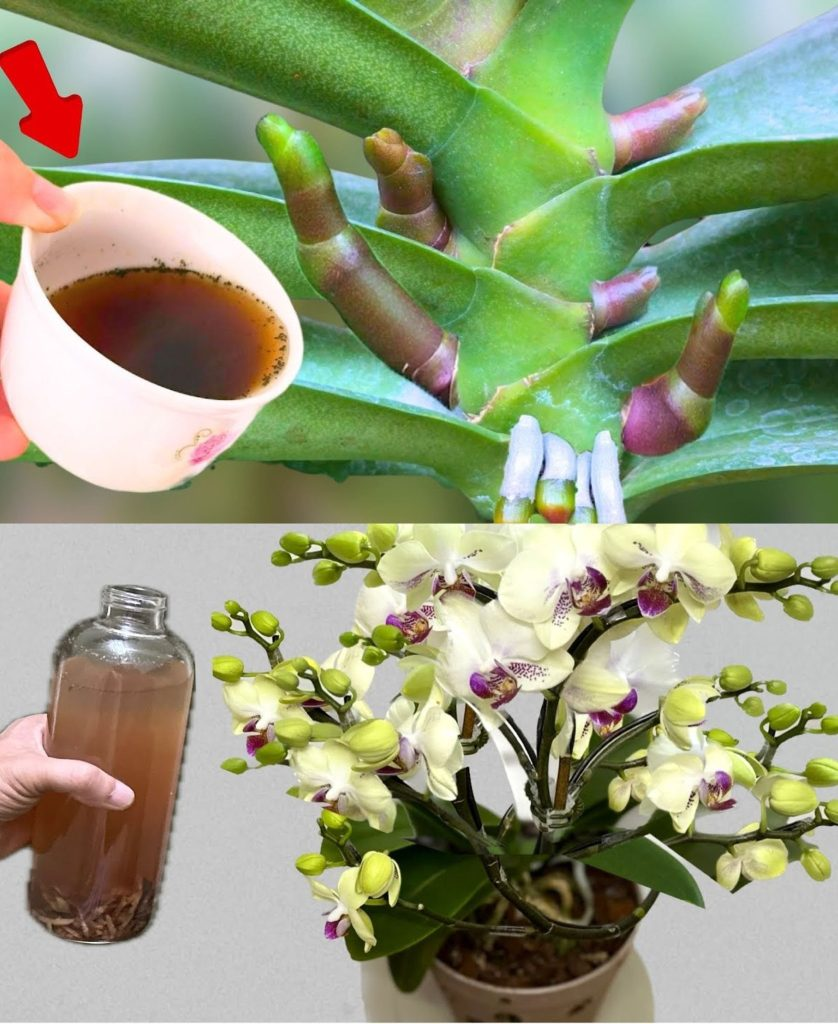
1 lemon is all that’s needed to revive an orchid. Here’s how it work
Some gardening tips recommend wiping orchid leaves with diluted lemon juice to make them shiny.
This is not a necessary part of orchid care.
Although gently cleaning leaves can remove dust, lemon juice may leave acidic residue and potentially irritate or damage delicate tissues.
A safer approach is to use a soft cloth lightly dampened with clean water.
Carefully wipe the upper surfaces of the leaves without allowing water to collect in the crown.
Avoid using household cleaning products, concentrated citrus juice, or oily substances on orchid leaves.
The goal is simply to remove dust without interfering with the plant’s natural functions.
7. How to Encourage Your Orchid to Bloom Again
One of the most rewarding experiences for an orchid owner is seeing a plant produce a new flower spike.
However, flowering depends on several environmental factors.
Provide Adequate Light
Insufficient light is a common reason orchids fail to bloom.
Place your orchid somewhere bright but protected from intense direct sunlight.
Maintain Suitable Temperatures
Many Phalaenopsis orchids benefit from a modest difference between daytime and nighttime temperatures.
A slightly cooler nighttime environment can help encourage flower spike development in mature, healthy plants.
Avoid sudden temperature extremes or placing the plant near cold drafts.
Feed With Appropriate Orchid Fertilizer
Orchids need nutrients to support healthy growth.
Use a balanced fertilizer specifically formulated for orchids.
Follow the manufacturer’s dilution and application instructions.
Avoid applying concentrated fertilizer directly to dry roots.
It is generally better to fertilize carefully and consistently than to use excessive amounts in an attempt to accelerate growth.
Be Patient
An orchid may need several months to recover and produce new flowers.
Even when the plant is healthy, flowering does not happen continuously.
After its blooming period, it may focus on growing new leaves and roots.
Patience is an important part of orchid care.
8. Common Household Ingredients You Should Avoid
The internet is full of suggestions for using kitchen ingredients as plant treatments.
Some may sound harmless, but they are not necessarily appropriate for orchids.
Here are several popular remedies that deserve caution.
Lemon juice: Its acidity can disturb the growing medium and potentially damage roots or leaves.
Vinegar: Concentrated vinegar is acidic and can injure plant tissues.
Sugar water: Sugar is not a balanced fertilizer and may encourage unwanted microbial growth.
Coffee grounds: They can create an unsuitable growing environment and are not a reliable orchid fertilizer.
Milk: Applying milk to orchid roots or leaves can leave residues and encourage microbial growth.
Banana peels: Although they contain minerals, placing banana peels in an orchid pot does not provide controlled or balanced nutrition.
Instead of experimenting with household mixtures, use an appropriate orchid fertilizer and a suitable growing medium.
9. How to Maintain a Healthy Orchid Throughout the Year
Preventing problems is usually easier than trying to rescue a severely damaged plant.
A few simple habits can help your orchid remain healthy.
Check the roots regularly. Healthy roots are one of the best indicators of an orchid’s condition.
Use suitable containers. Pots with drainage holes help prevent excess water from accumulating.
Keep the leaves clean. Remove dust gently with a damp, soft cloth.
Avoid sudden environmental changes. Orchids generally respond better to stable conditions.
Inspect for pests. Watch for mealybugs, scale insects, and spider mites.
Provide good airflow. Gentle air circulation helps reduce excessive moisture around the plant.
Repot when necessary. Orchid bark eventually breaks down and loses its structure. Replace it when it becomes compacted or decomposes.
These small steps can make orchid care much easier.
10. When Is an Orchid Too Damaged to Save?
Not every struggling orchid can recover.
A plant with completely rotten roots, a severely damaged crown, and no healthy growing tissue may have a very poor chance of survival.
However, an orchid with only a few healthy roots may still recover with careful attention.
Look for signs such as:
Firm, healthy remaining roots.
A living central crown.
Leaves that retain some firmness.
New root growth.
Gradual improvement after correcting watering conditions.
Recovery can be slow.
Avoid repeatedly removing the plant from its pot to check for progress, as this can cause additional stress.
Give it stable conditions and monitor changes over time.
Final Thoughts: Can One Lemon Really Revive an Orchid?
The idea that one lemon can revive an orchid is an appealing gardening shortcut, but it is not a scientifically established treatment.
Lemon juice does not replace proper watering, healthy roots, adequate light, or balanced nutrition.
In some circumstances, applying it directly to an orchid may actually cause additional problems because of its acidity.
If your orchid is struggling, the best approach is to identify the underlying cause.
Check the roots, improve drainage, provide suitable indirect light, use an appropriate orchid potting mixture, and adjust watering according to the plant’s needs.
With patience and proper care, many orchids that appear unhealthy can recover and eventually produce beautiful flowers again.
Remember: orchids do not need mysterious kitchen remedies to thrive. They need the right growing conditions, consistent care, and time.
Sometimes, the best way to save a struggling plant is not to add another ingredient, but to understand what the plant actually needs.