9 Foot Symptoms You Should Never Ignore: What They Could Mean
Your feet carry you through almost everything you do each day. Walking, standing, climbing stairs, exercising, and even simple household activities all depend on healthy feet.
Because your feet are under constant pressure, occasional soreness after a long day isn’t unusual. But some symptoms can be signs of problems involving the nerves, blood vessels, skin, joints, or muscles.
In particular, persistent burning, tingling, numbness, swelling, color changes, or wounds that don’t heal deserve attention.
This doesn’t mean every unusual foot sensation indicates a serious disease. Many different conditions can cause similar symptoms. The important thing is to recognize when a symptom should be checked rather than ignored.
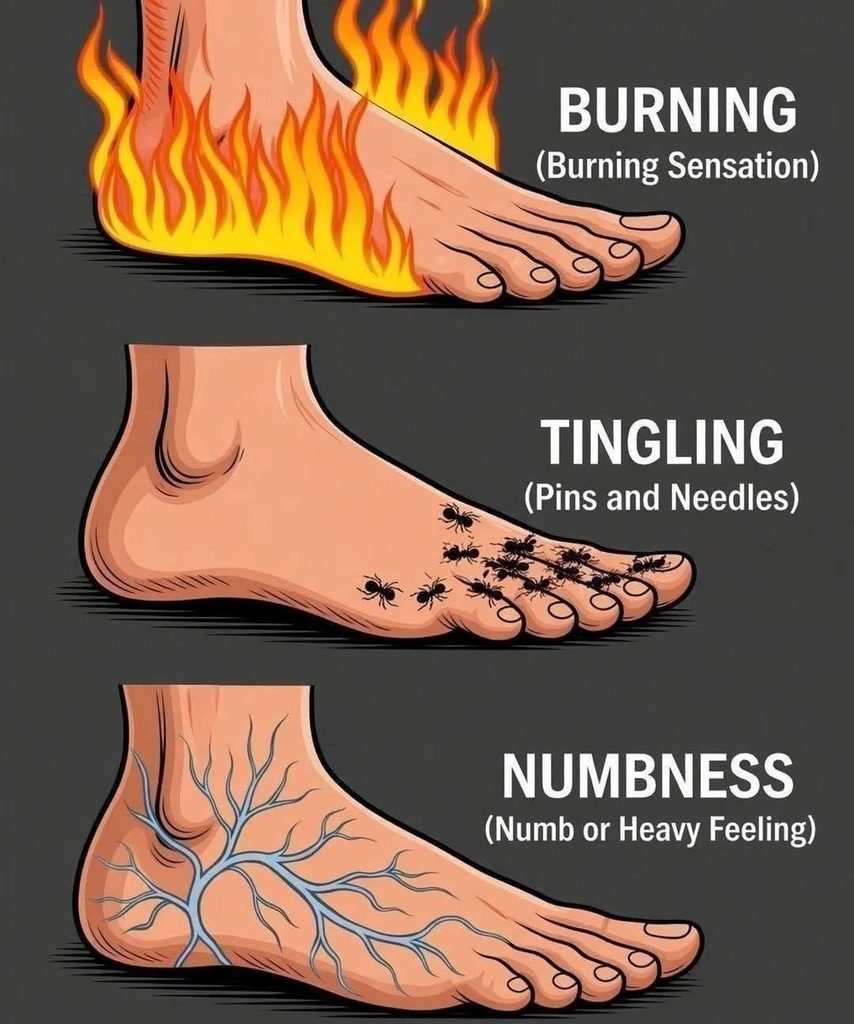
1. Burning Sensation in Your Feet
A persistent burning sensation in the feet can have several possible causes.
One important possibility is peripheral neuropathy, a condition involving damage or dysfunction of nerves outside the brain and spinal cord. Burning, stabbing, tingling, and numbness are common symptoms, particularly in the feet. Diabetes is one of the most common causes of peripheral neuropathy.
Other causes can include certain medications, alcohol exposure, vitamin deficiencies, infections, autoimmune conditions, nerve injuries, and other medical problems.
A burning sensation can also occur because of local foot problems or nerve compression.
If the burning is persistent, repeatedly returns, or is accompanied by numbness or weakness, arrange a medical evaluation rather than assuming it’s simply tired feet.
2. Tingling or “Pins and Needles”
That familiar feeling of tiny pins and needles can happen when a nerve is temporarily compressed—for example, after sitting in one position for too long.
Usually, changing position makes the sensation disappear within a few minutes.
But persistent or recurring tingling in the feet is different.
It can occur when a nerve is damaged, irritated, or compressed. Peripheral neuropathy is one possible explanation, while a nerve problem originating in the lower back can also cause symptoms that travel into the leg and foot.
If the tingling keeps returning without an obvious reason, it’s worth discussing with a healthcare professional.
3. Numbness or Loss of Feeling
Numbness means you aren’t feeling sensations normally.
You might notice that your foot feels unusually heavy, “asleep,” or less sensitive to temperature and touch.
Peripheral neuropathy can cause gradual numbness in the feet, sometimes affecting both sides. on can make it easier to overlook injuries.
For example, someone with reduced sensation may develop a blister or small cut without realizing it. This is particularly important for people with diabetes, because nerve damage and reduced blood supply can increase the risk of foot complications.
Don’t ignore persistent numbness simply because the foot doesn’t hurt.
4. Unexplained Weakness
If your foot suddenly feels weak, that’s different from ordinary tiredness.
You might notice:
Difficulty lifting the front of your foot
Trouble climbing stairs
Your foot catching on the ground while walking
Difficulty standing on your toes
Increasing problems with balance
Nerve disorders can cause muscle weakness, and some forms of peripheral neuropathy can affect the muscles responsible for moving the foot.
Sudden weakness deserves urgent medical attention, particularly if it develops together with numbness, difficulty speaking, facial weakness, dizziness, or other neurological symptomses Cold or Changes Color
Pay attention if one or both feet become noticeably colder than usual or change color.
Circulation problems can sometimes affect the feet.
Peripheral artery disease (PAD) occurs when arteries supplying the legs become narrowed or blocked. Symptoms can include pain with walking that improves with rest, cold feet or toes, reduced pulses, hair loss, and sores that don’t heal.
A change in the color or temperature of your foot is particularly important when it occurs together with pain, numbness, or wounds.
Don’t assume a consistently cold or discolored foot is simply a normal effect of getting older.
6. A Wound That Won’t Heal
A small cut or blister should normally begin to improve as the skin repairs itself.
If a foot wound remains open, repeatedly breaks down, or doesn’t appear to be healing, it deserves medical attention.
This is especially important if you have diabetes.
Diabetes can contribute to nerve damage and reduced blood supply, which can make injuries harder to notice and harder to heal.
Look regularly at the bottoms and sides of your feet, particularly if you have reduced sensation.
Seek medical care promptly for wounds that are deep, increasingly red, swollen, warm, painful, draining pus, or failing to heal.
7. Persistent Swelling
Foot or ankle swelling can occur for many reasons.
It may happen after an injury, prolonged standing, intense activity, or certain medical conditions.
Temporary swelling isn’t necessarily a sign of a serious problem.
But swelling that doesn’t improve, keeps returning, or occurs with significant pain should be evaluated.
Sudden swelling accompanied by severe pain, warmth, redness, or other symptoms may require more urgent assessment.
If you can’t put weight on the foot, have severe swelling or pain, or the foot has changed shape following an injury, seek urgent medical attention.