Never Uproot This Plant If It Appears in Your Garden: Why Some “Weeds” Deserve a Second Look
There Is Another Reason to Avoid Unnecessary Removal
Every plant interacts with its environment.
Plants can provide habitat and food for insects, contribute organic matter, and participate in the local ecosystem.
A perfectly manicured garden may look beautiful, but biodiversity can be valuable too.
This doesn’t mean your garden has to become wild.
Instead, you can intentionally create different zones.
Keep vegetable beds tidy.
Maintain pathways.
Control invasive or aggressive plants.
But consider leaving suitable native or harmless vegetation in less-used areas.
This can create a more diverse garden without sacrificing the appearance or productivity of the main growing areas.
Be Careful With Homemade Plant Remedies
Another common internet trend is turning unidentified plants into homemade remedies.
This is considerably more concerning than simply leaving a plant in the garden.
A plant can contain naturally occurring chemicals that affect the body. The concentration of these compounds may vary depending on the species, plant part, growing conditions, and stage of growth.
Traditional use alone doesn’t establish that a preparation is safe or effective.
If you are interested in herbal plants, learn their scientific identification and consult reliable botanical and medical references rather than experimenting with unidentified vegetation.
What If the Plant Is Invasive?
There is an important distinction between a harmless wild plant and an invasive species.
Some introduced plants can spread rapidly and displace native vegetation.
If an unknown plant is spreading across large areas, producing huge numbers of seeds, or returning aggressively after removal, identification becomes particularly important.
Don’t intentionally propagate an unidentified plant simply because an online post describes it as beneficial.
First determine what it is.
If it turns out to be invasive, appropriate removal and disposal may be the better choice.
The Garden Can Teach You Something
One of the most enjoyable things about gardening is discovering how much is happening beyond the plants you intentionally planted.
A small patch of spontaneous vegetation can attract insects, cover soil, produce flowers, or reveal something about the conditions in your garden.
Perhaps the soil is compacted.
Perhaps the area stays unusually wet.
Perhaps the soil is disturbed.
Perhaps the seeds were carried there by wind, birds, animals, or water.
Even an unwanted plant can provide information about its surroundings.
A Better Rule Than “Never Uproot It”
Instead of following the viral rule “Never uproot this plant,” a better gardening rule is:
“Don’t remove an unfamiliar plant until you know what it is and whether it is causing a problem.”
That approach gives you the opportunity to preserve useful plants while still protecting your garden from invasive or harmful species.
And if the plant turns out to be something you don’t want, you can remove it with confidence because you know what you’re dealing with.
Final Thoughts
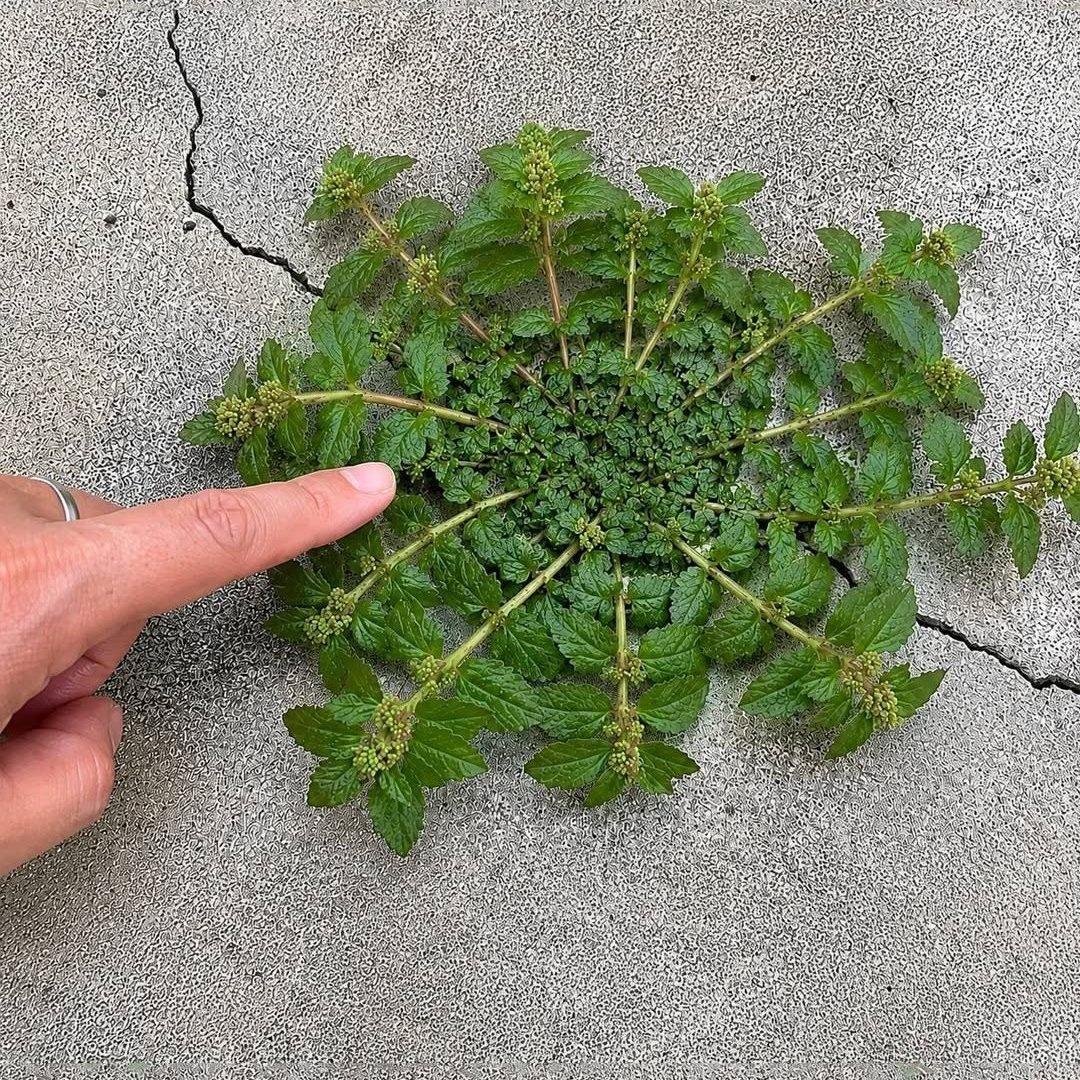
The plant in the photograph is a reminder that not everything growing naturally in a garden deserves an immediate trip to the compost pile.
Some wild plants can provide ecological value, support insects, protect soil, or have interesting histories of human use. Others may genuinely be invasive, toxic, or competitive with your crops.
The difference is identification.
A single photograph and a dramatic social-media caption aren’t enough to establish what a plant is or whether it is safe to eat or use.
So the next time an unfamiliar plant appears in your garden, pause before pulling it out.
Take a few photographs.
Observe its leaves and growth pattern.
Look for flowers.
Pay attention to where it is growing.
Then confirm its identity using a reliable source.
You may discover that the “weed” you were about to remove is actually an interesting and useful part of your garden—or you may discover that it really does need to go.
Either way, knowing what you have before removing it is one of the smartest habits a gardener can develop.