“Doctors Warn: Limit Eating These 4 Foods Immediately Because They Contain Lots of Parasites” — What You Should Really Know
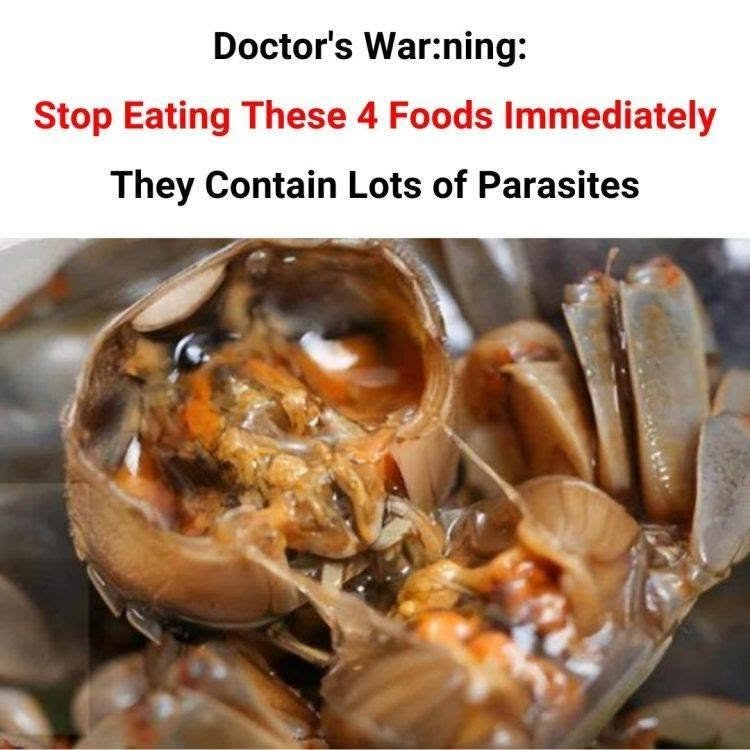
A warning claiming that doctors are telling people to immediately stop eating four common foods because they contain large numbers of parasites has been spreading online. The image accompanying the claim makes the message even more alarming, showing what appears to be shellfish with the words suggesting that these foods are full of parasites.
The claim contains a small element of truth but presents it in a misleading way.
Certain foods can carry parasites, particularly when they are eaten raw, undercooked, contaminated, or handled improperly. However, it is not accurate to say that ordinary servings of these foods automatically contain “lots of parasites” or that people should immediately stop eating them altogether.
The real issue is food preparation and food safety.
Some foods do have a higher risk of transmitting parasites when consumed raw or insufficiently cooked. Proper cooking, appropriate food handling, good hygiene, and safe sourcing can greatly reduce the risk.
Here are four food categories that deserve particular attention, along with what you should actually know about them.
1. Raw or Undercooked Fish
Fish is nutritious and can be an excellent source of protein, omega-3 fatty acids, vitamins, and minerals. But certain fish can carry parasites, especially when eaten raw or insufficiently cooked.
This is particularly relevant to some freshwater fish.
Certain parasitic infections are associated with eating raw or inadequately cooked freshwater fish. These parasites can include various types of worms that have complex life cycles involving fish and other animals.
This does not mean that all fish are full of parasites.
It means that eating certain fish raw or undercooked can increase the risk of infection.
Foods such as raw fish dishes, certain types of sushi, sashimi, ceviche, or other preparations involving uncooked seafood require appropriate food-safety controls.
Cooking fish thoroughly is one of the most reliable ways to reduce the risk from parasites and other foodborne organisms.
What about frozen fish?
Freezing can destroy certain parasites under appropriate conditions, which is why freezing is sometimes used as part of seafood safety procedures for fish intended to be eaten raw.
However, freezing does not necessarily eliminate every type of harmful microorganism.
For that reason, thoroughly cooking seafood remains one of the safest approaches.
If you are pregnant, elderly, have a weakened immune system, or have another condition that increases your risk of severe foodborne illness, extra caution with raw seafood is especially important.
2. Raw or Undercooked Shellfish and Crustaceans
The photograph accompanying the viral claim appears to show shellfish or another type of aquatic animal.
Shellfish can include foods such as:
Clams
Mussels
Oysters
Scallops
Crabs
Crayfish
Shrimp
Some parasites can be transmitted through raw or inadequately cooked aquatic animals.
Certain freshwater crustaceans, for example, can be involved in the transmission of particular parasitic infections.
But again, the important distinction is between the food itself and the way it is prepared.
It would be misleading to tell people that all shellfish are naturally packed with parasites.
Millions of people eat properly prepared seafood without developing parasitic infections.
The risk increases when seafood is eaten raw or inadequately cooked or when it comes from contaminated environments.
Why cooking matters
Proper cooking can destroy many parasites and other organisms that may be present in food.
This is why raw seafood is generally a higher-risk choice than properly cooked seafood.
If you enjoy shellfish, you do not necessarily need to eliminate it from your diet because of a social-media warning.
Instead, pay attention to where it comes from, how it is stored, and how thoroughly it is cooked.
3. Undercooked Meat
Another category that can potentially transmit parasites is raw or undercooked meat.
Different parasites are associated with different types of meat.
For example, certain tapeworm infections can be acquired by eating infected, insufficiently cooked pork. Other parasitic infections can be associated with undercooked beef or other meats.
This is one reason why eating raw or inadequately cooked meat carries greater risk than eating meat that has been properly cooked.
However, the viral statement that these foods simply “contain lots of parasites” is still an oversimplification.
Not every piece of meat contains parasites.
The risk depends on many factors, including the animal, geographic region, farming conditions, food inspection, handling, and cooking practices.
The safest approach
Cook meat properly and avoid eating meat that remains raw or inadequately cooked in the center.
Ground meat deserves particular attention because microorganisms can be distributed throughout the product during grinding.
Using a food thermometer is more reliable than judging safety only by color.
A piece of meat can look cooked on the outside while still being insufficiently heated in the center.
4. Raw Aquatic Plants and Contaminated Produce
The fourth category is more complicated because parasites are not limited to meat and seafood.
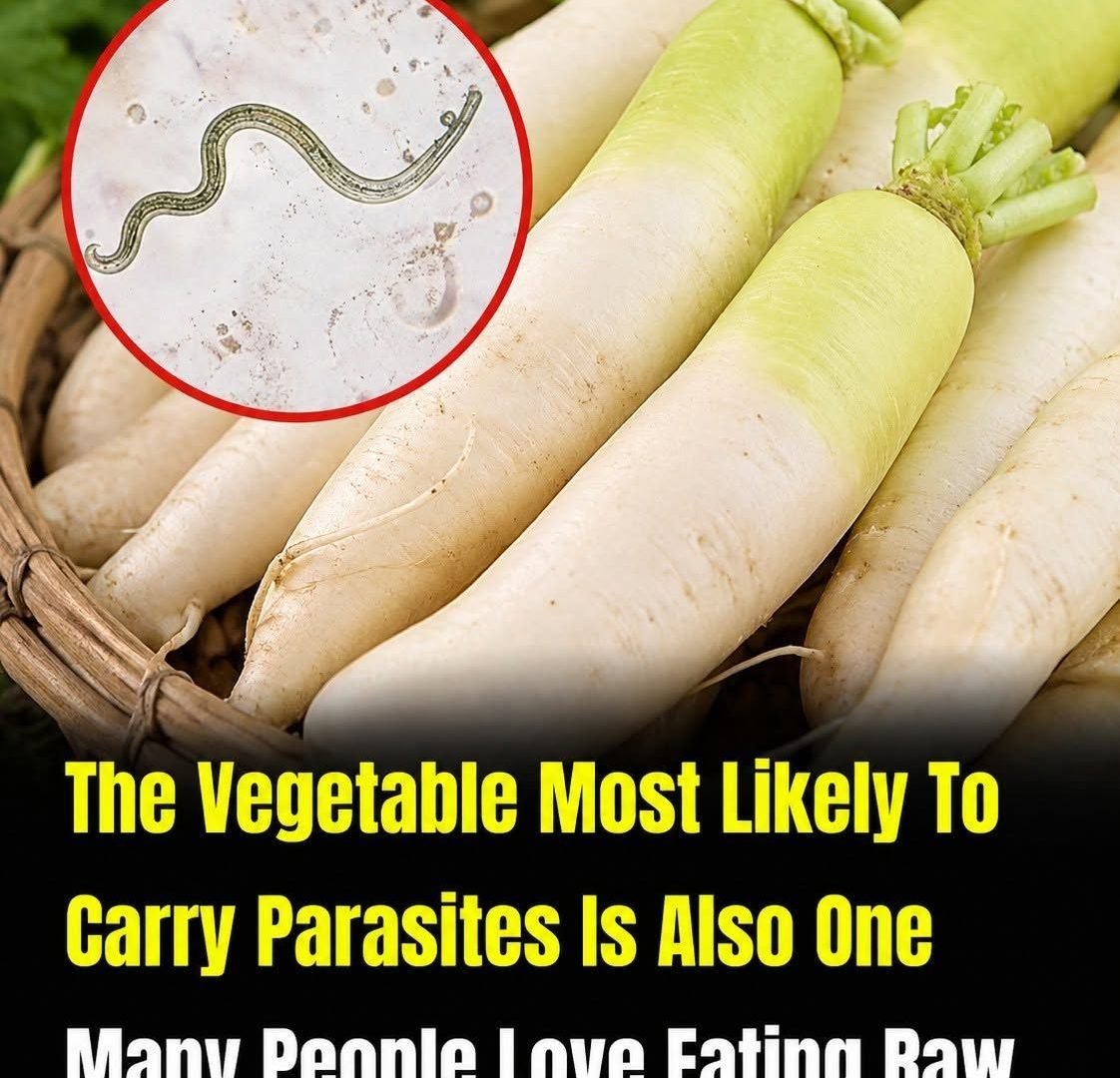
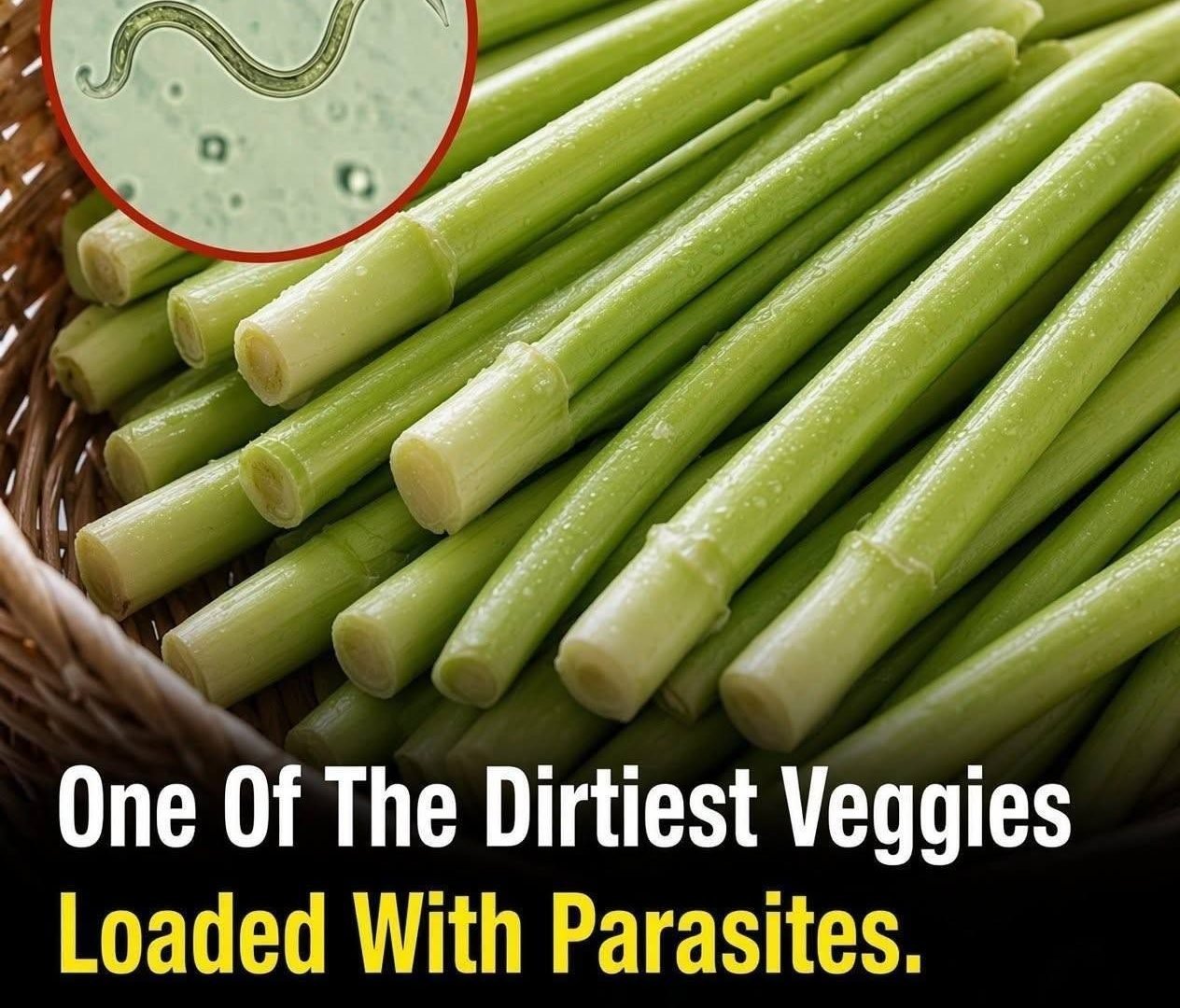
Certain parasitic infections can be transmitted through raw aquatic plants or vegetables that have become contaminated.
Watercress and other freshwater plants have been associated with some parasitic infections in areas where those parasites occur.
Fresh produce can also become contaminated through polluted water, contaminated soil, animal feces, or poor handling.
This does not mean that vegetables are dangerous or that you should stop eating salads.
Vegetables and fruits are important parts of a healthy diet.
The important issue is proper washing and food hygiene.
Wash fresh produce properly
Before eating fruits and vegetables, rinse them thoroughly under running water.
Remove visible dirt and damaged portions.
Keep raw produce separate from raw meat and seafood during food preparation.
Clean cutting boards, knives, countertops, and other surfaces after preparing raw animal products.
These simple habits can reduce the risk of transferring harmful organisms from one food to another.