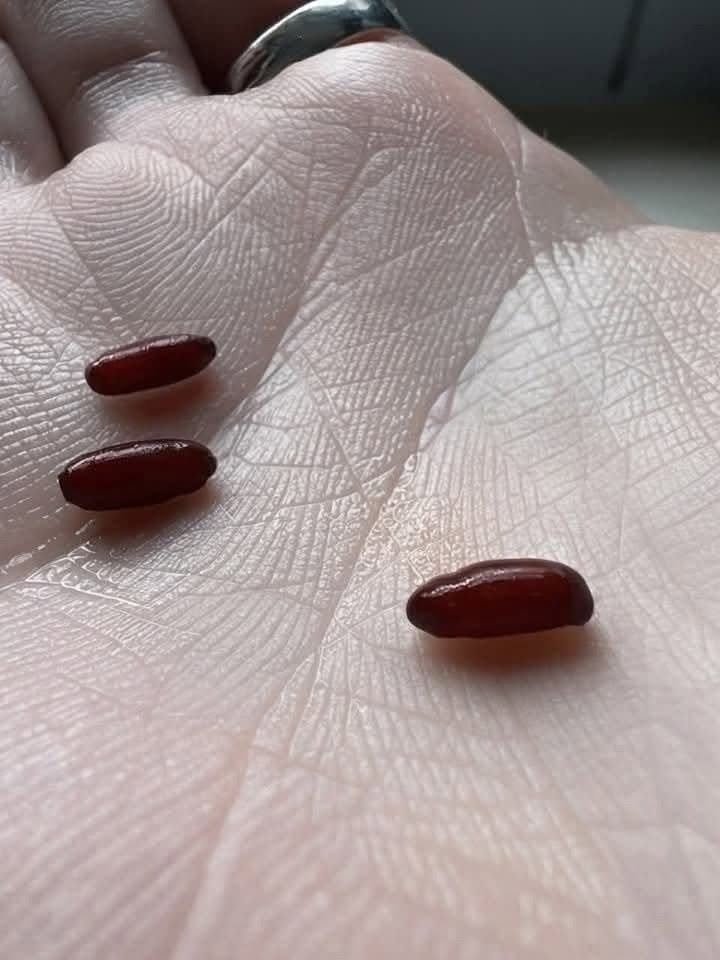
Warning! If You Find Silverfish in Your Home, It Could Be a Sign of Excess Moisture
However, you may want to investigate further if:
You see silverfish almost every day.
You see several of them at once.
You find them in multiple rooms.
You discover damage to books or paper.
You notice a musty smell or visible mold.
You find unexplained dampness.
You suspect a plumbing or roof leak.
Silverfish continue appearing after you improve cleaning and moisture control.
Repeated sightings can indicate that there is an established population somewhere nearby or that your home has environmental conditions that continue to attract them.
What About Eggs?
Silverfish reproduce by laying eggs, and their eggs can be difficult to notice because they may be deposited in cracks and other protected areas.
This is another reason why simply killing the silverfish you see may not solve the underlying problem.
If the environment remains humid and provides suitable hiding places, additional insects may continue to appear.
Addressing the conditions that support them is therefore an important part of long-term control.
Natural Prevention Tips
If you prefer to start with basic household measures, focus on making your home less attractive to silverfish.
Keep rooms dry, improve ventilation, repair leaks, reduce clutter, and regularly vacuum along baseboards and in dark corners.
Pay special attention to bathrooms, kitchens, closets, storage rooms, and other areas where humidity tends to accumulate.
You should also avoid allowing wet towels, damp clothing, or other moisture-holding materials to remain in enclosed spaces for extended periods.
Should You Use Insecticides?
Chemical pest-control products are not always necessary for a small number of silverfish.
If you continue finding large numbers despite addressing moisture and hiding places, professional pest control may be appropriate.
If you decide to use a pesticide, always read and follow the product label carefully. Keep products away from children and pets and use only products approved for the intended location and pest.
Do not mix different chemicals unless the label specifically allows it.
The Bigger Message Behind Seeing Silverfish
The most useful way to think about silverfish is not simply, “How do I kill this insect?”
Instead, ask:
“Why does this insect want to live here?”
If silverfish repeatedly appear, the answer may involve moisture, humidity, shelter, food sources, or a combination of these factors.
Finding the underlying condition can be more useful than simply removing the insects you happen to see.
For example, if silverfish are repeatedly appearing underneath a kitchen sink, killing each one individually may not solve the problem if a small plumbing leak is keeping the cabinet damp.
Likewise, if silverfish are appearing around boxes of old books in a storage room, moving the books to a dry environment and reducing humidity may be more effective as a long-term strategy.
Final Thoughts
Finding a silverfish in your home can certainly be unpleasant, but there is usually no reason to panic. These insects are generally harmless to people and are mainly considered household nuisance pests.
However, repeated silverfish sightings are worth paying attention to.
They may be a clue that certain areas of your home are too humid, poorly ventilated, damp, or providing plenty of hiding places and food sources.
Start by checking bathrooms, kitchens, closets, storage areas, plumbing, windows, and other locations where moisture can accumulate. Fix leaks, improve ventilation, reduce clutter, keep paper and cardboard in dry areas, and seal obvious cracks and gaps.
And remember: finding one silverfish doesn’t automatically mean you have a serious infestation or an unclean home. But if you keep seeing them, don’t just ignore the pattern. Take it as a reason to inspect your home for moisture and other conditions that could be attracting them.
A small insect can sometimes provide a useful warning that something in your home’s environment deserves a closer look.