What Happens When You Develop Excess Fluid in Your Foot? Understanding the Causes and Warning Signs
The human body has remarkable ways of protecting itself, repairing damaged tissues, and maintaining a healthy balance of fluids. However, when fluid accumulates in the tissues of the feet or ankles, it can cause noticeable swelling, discomfort, and sometimes signal an underlying medical condition.
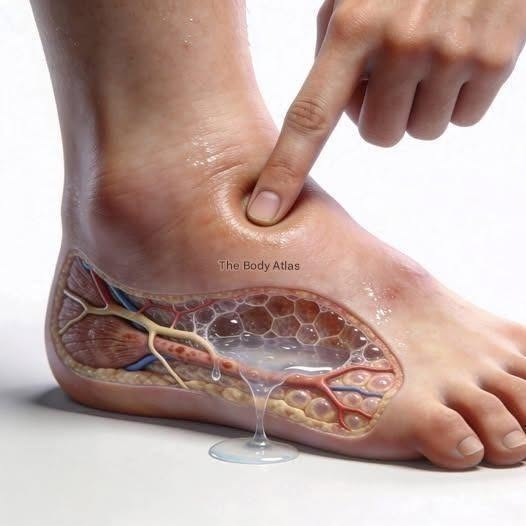
The image illustrates a foot with fluid accumulating beneath the skin. Although the illustration is dramatic, it is important to understand that fluid does not normally collect in the foot in this way or leak through intact skin without an underlying problem. Real-life swelling can have several different causes, ranging from spending too much time standing to conditions that require medical attention.
Understanding why fluid accumulates, recognizing the warning signs, and knowing when to seek medical care can help you protect your health.
What Is Fluid Retention?
Fluid retention, medically known as edema, occurs when excess fluid builds up in the body’s tissues. It most commonly affects the feet, ankles, and lower legs because gravity encourages fluid to accumulate in these areas, particularly when a person sits or stands for extended periods.
In healthy individuals, blood vessels, lymphatic vessels, and surrounding tissues work together to maintain fluid balance. Blood vessels deliver oxygen and nutrients to tissues, while the lymphatic system helps return excess fluid to the bloodstream.
When this balance is disrupted, fluid can accumulate in the spaces between cells, causing swelling.
Edema may affect one foot or both feet. Its severity depends on the underlying cause, and it can develop gradually or appear relatively quickly.
Mild swelling after a long day on your feet may resolve with rest. Persistent, painful, or unexplained swelling, however, deserves medical evaluation.
Common Causes of Foot and Ankle Swelling
1. Prolonged Sitting or Standing
One of the most common causes of mild foot swelling is remaining in the same position for too long.
When you stand or sit for extended periods, gravity makes it more difficult for blood and fluid to return efficiently from the lower extremities to the heart. As a result, fluid may accumulate around the ankles and feet.
This type of swelling is often more noticeable toward the end of the day and may improve after resting with the legs elevated.
Regular movement, short walking breaks, and ankle exercises can help improve circulation.
However, swelling that repeatedly occurs without an obvious explanation should not automatically be attributed to prolonged standing.