If You Think You’re Having a Heart Attack While Home Alone, Do This Immediately
Don’t Wait for the Pain to Become Severe
One of the most dangerous mistakes is waiting for symptoms to become dramatic.
The American Heart Association notes that heart attacks can begin suddenly and intensely, but they can also begin slowly with relatively mild discomfort.
You don’t need to prove to yourself that you’re having a heart attack before calling.
If you’re experiencing symptoms that could represent a heart attack, let medical professionals determine the cause.
Heartburn Can Feel Similar
Another reason people delay treatment is that they assume chest discomfort is indigestion.
Heart attack symptoms can sometimes feel like:
Heartburn
Indigestion
Pressure
Fullness
Burning
Stomach discomfort
The NHS specifically notes that heart-attack symptoms can sometimes resemble indigestion. (nhs.uk)
That’s why unexplained chest discomfort shouldn’t simply be dismissed as something you ate.
What If the Symptoms Go Away?
Don’t automatically assume you’re safe.
Heart-attack symptoms can come and go. The American Heart Association specifically warns that discomfort may last several minutes or disappear and return.
If concerning symptoms occur, seek medical evaluation rather than assuming that their disappearance means the problem is over.
Keep Your Emergency Information Accessible
One useful preparation step—especially for people who live alone—is to make emergency information easy to find.
Keep a current list of:
Medications
Allergies
Important medical conditions
Emergency contacts
Your doctor’s contact information
You can also keep essential medications in a known, accessible place and make sure your phone is normally charged.
These small preparations can make an emergency less chaotic.
Why Every Minute Matters
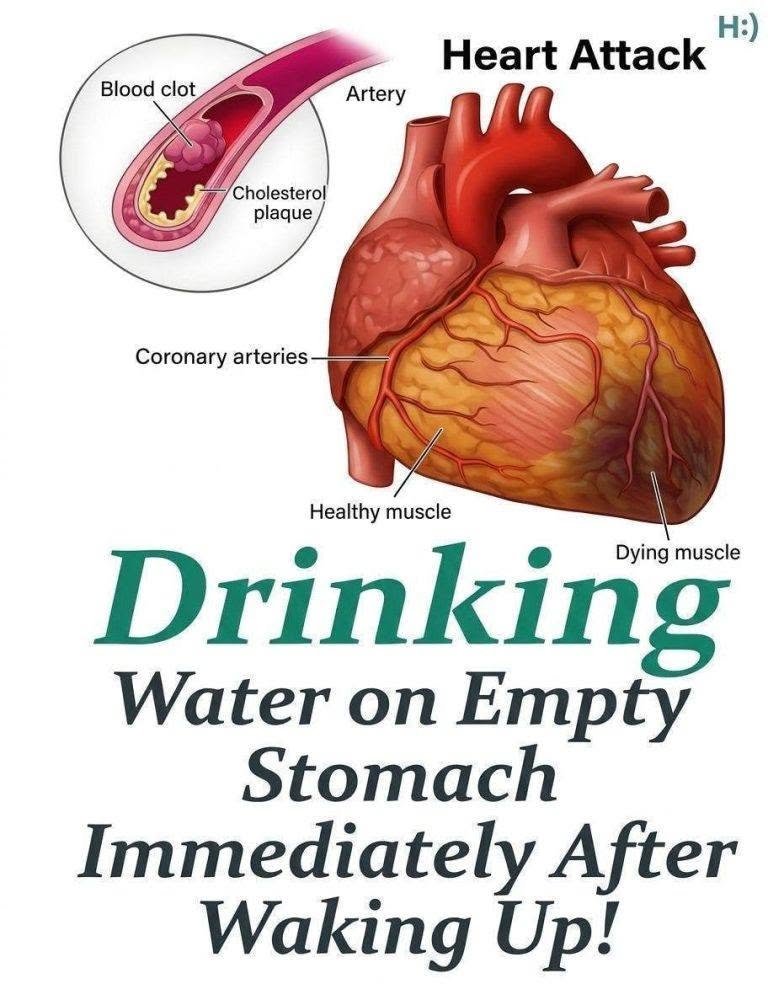
A heart attack can damage heart muscle when blood flow is interrupted.
That’s why early recognition and rapid medical treatment matter.
Calling emergency services doesn’t merely arrange transportation. Emergency personnel can begin assessment and treatment and communicate with the receiving hospital before arrival. The American Heart Association says calling EMS is often the fastest way to receive lifesaving care. (www.heart.org)
This is much more valuable than attempting an unproven home maneuver.
The Real Lesson Behind the Viral Image
The image says:
“Do this in 10 seconds.”
The more accurate message would be:
If you think you’re having a heart attack, don’t waste 10 seconds on a viral trick. Use those seconds to get emergency help.
There is no magic cough, breathing technique, body position, drink, or movement that can reliably reopen a blocked coronary artery at home.
And if you become unconscious and stop breathing normally, that’s a different emergency—cardiac arrest—where immediate CPR and an AED can be lifesaving. (www.heart.org)
A Simple Emergency Checklist
If you suspect a heart attack while alone:
🚨 Call your local emergency number immediately.
📱 Put the phone on speaker and follow the operator’s instructions.
🪑 Sit down and rest.
🚫 Don’t drive yourself.
🚫 Don’t attempt “cough CPR.”
💊 Ask about aspirin rather than assuming it’s safe for you.
❤️ If you lose consciousness and stop breathing normally, emergency responders or a nearby person should begin Hands-Only CPR and use an AED if available.
Final Takeaway
The idea that you can stop a heart attack in 10 seconds with a special technique is misleading.
The most important action is much simpler:
Recognize the warning signs and call emergency medical services immediately.
Chest pressure or pain, shortness of breath, sweating, nausea, lightheadedness, or pain spreading to the arm, jaw, back, neck, or stomach can be warning signs of a heart attack. (www.heart.org)
Don’t wait for symptoms to become unbearable. Don’t try to “cough it away.” Don’t drive yourself if emergency medical transportation is available.
When a heart attack is possible, getting professional help quickly is the action that matters most.
This article is for general education and does not replace emergency medical care. If you or someone near you is experiencing possible heart-attack symptoms right now, contact your local emergency medical service immediately.