The Beetroot Upgrade: What Really Happens to Your Body When You Eat Beets?
The effects vary depending on:
Exercise type
Fitness level
Amount consumed
Timing
Duration of supplementation
Individual response
Some studies have found little or no benefit for certain forms of high-intensity interval exercise. (PubMed)
4. Beets Provide Folate
Beets are also a source of folate, a B vitamin that the body needs for normal cell division and DNA-related processes.
Folate is particularly important during periods of rapid cell growth and development.
Rather than thinking of beets as a “folate cure,” it’s more useful to consider them one of many vegetables that can contribute to an adequate intake of this essential nutrient.
Other foods containing folate include:
Beans
Lentils
Leafy green vegetables
Asparagus
Avocado
Citrus fruits
Fortified grains
A varied diet is the best way to obtain nutrients.
5. Beets Provide Dietary Fiber
Whole beets contain dietary fiber.
Fiber can help support normal digestive function and contributes to the overall quality of a plant-rich diet.
Fiber also helps add bulk to food and can contribute to feelings of fullness.
However, beetroot juice is different from eating whole beets.
When beets are juiced, much of the fiber is removed.
That’s an important distinction if your goal is to increase dietary fiber.
Whole beets give you both the vegetable and its fiber; beet juice concentrates certain components while providing much less fiber.
6. Their Deep Color Comes From Powerful Plant Pigments
Have you ever noticed that beetroot can turn your hands, cutting board or even other foods a vivid red-purple?
That color comes primarily from pigments called betalains.
These compounds have antioxidant properties and are one reason beetroot has attracted scientific interest.
But “antioxidant” should not be interpreted as meaning that eating beets will automatically remove toxins or prevent every disease.
The human body already has sophisticated antioxidant and detoxification systems.
Vegetables such as beets simply provide additional bioactive compounds as part of the diet.
7. Beets May Be Helpful for Heart Health
Because blood-vessel function and blood pressure are important components of cardiovascular health, researchers have investigated whether beetroot could have broader cardiovascular benefits.
The evidence is promising but shouldn’t be exaggerated.
Some systematic reviews have found reductions in blood pressure following beetroot juice consumption. One earlier meta-analysis found average reductions in both systolic and diastolic blood pressure, although effects varied according to the amount and duration of supplementation. (PubMed)
More recent evidence in people with hypertension also suggests a reduction in systolic blood pressure, but the researchers emphasized uncertainty in the evidence. (PubMed)
So the sensible conclusion is:
Beetroot may support cardiovascular health, particularly through its nitrate-related effects on blood pressure and vascular function.
It should not be described as a treatment for heart disease.
8. Beets Can Change the Color of Your Urine
Here’s something that can surprise people after eating a large amount of beetroot.
Your urine may become pink, red or reddish-purple.
This is commonly known as beeturia.
It can look alarming the first time it happens, but beet pigments can pass through the digestive system and affect urine color.
The same pigments can also temporarily change the color of bowel movements.
So if you eat a plate of beets and later notice a reddish color, don’t automatically assume that you are bleeding.
However, persistent blood-like discoloration without a clear dietary explanation should be medically evaluated.
9. Beets Are Not a “Detox”
One of the biggest claims associated with beetroot online is that it “cleans the blood” or “detoxes the liver.”
That’s an oversimplification.
Your liver and kidneys already perform major roles in processing and eliminating substances from the body.
Eating beets does not flush toxins out of your organs in some special overnight process.
What beets can do is provide:
Fiber
Folate
Potassium
Nitrate
Plant pigments
Other micronutrients and bioactive compounds
That’s already enough reason to include them in a healthy diet without turning them into a miracle food.
10. Whole Beets or Beetroot Juice?
Both can fit into a healthy diet, but they aren’t nutritionally identical.
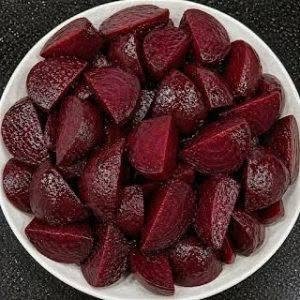
Whole cooked or raw beets
These provide:
Fiber
Water
Nitrate
Plant compounds
Vitamins and minerals
They also require chewing and can be incorporated into meals.
Beetroot juice
Juice can provide concentrated nitrate and has been extensively studied in exercise and blood-pressure research.
However, it generally contains much less fiber than the whole vegetable.
Some commercial beetroot drinks may also contain added sugar or other ingredients, so the nutrition label matters.